
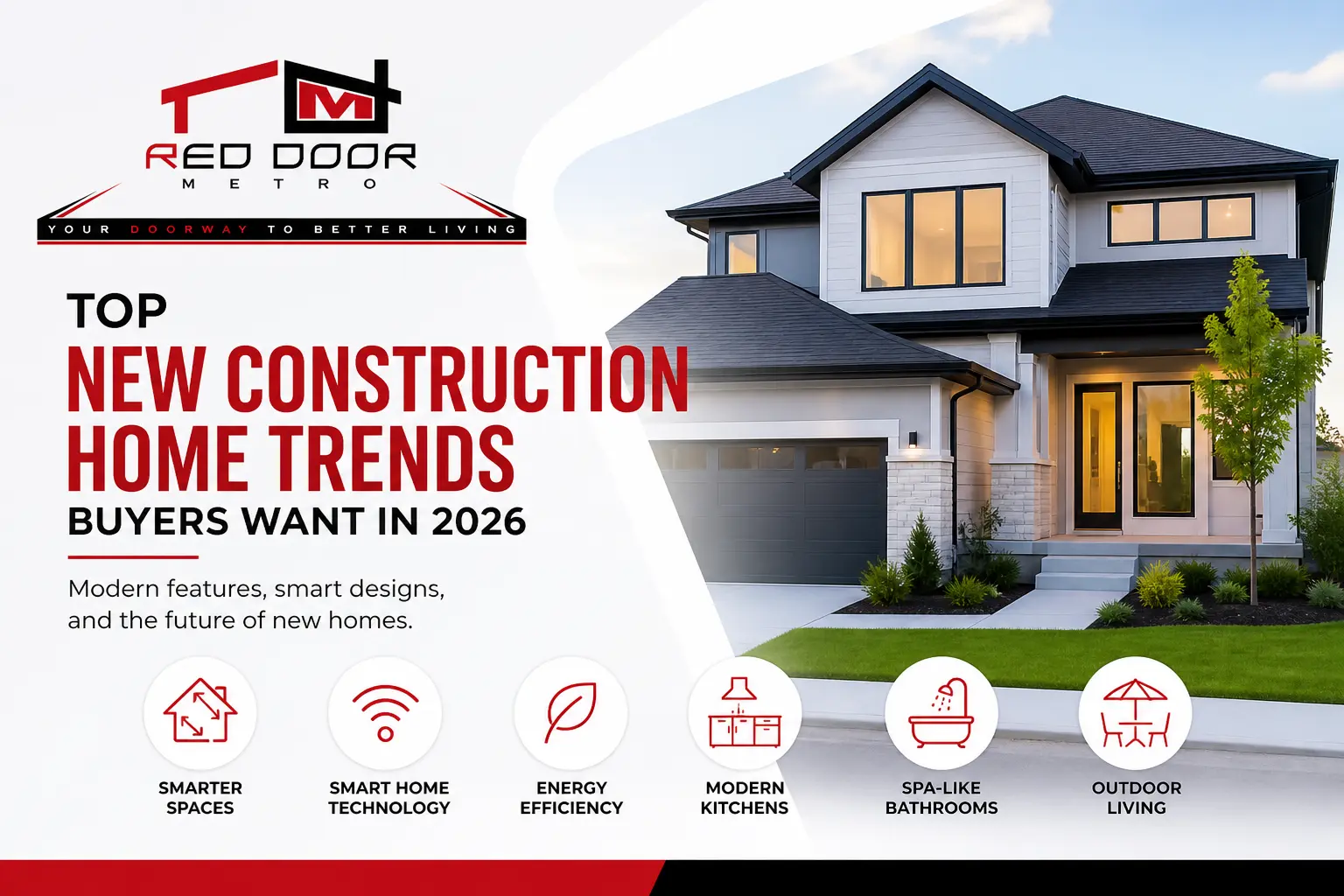
If you’re planning to buy a new construction home, you’re entering a market that’s changing quickly. Builders are no longer just building houses—they’re designing homes around how people actually live today. In 2026, buyers are more focused on efficiency, smart features, comfort, and long-term value.
This guide breaks down the most important trends shaping new construction so you can make a smarter buying decision.
Why New Construction Is Growing in 2026
More buyers are shifting toward new construction, and there are clear reasons why.
✔ Less maintenance compared to older homes
✔ Energy-efficient designs that reduce monthly bills
✔ Builder incentives like closing cost help or rate buydowns
✔ Modern layouts that fit today’s lifestyle
✔ Move-in-ready condition with no repairs needed
The biggest appeal is simple: buyers want a home that’s ready to live in without extra work or unexpected costs.
Trend #1: Smaller but Smarter Homes
The idea of “bigger is better” is fading. Buyers now prefer homes that are efficient and functional.
What’s happening
✔ Homes between 1,500 and 2,500 sq ft are in high demand
✔ Less wasted space, more usable design
✔ Multi-purpose areas replacing formal rooms
Why it matters
✔ Lower purchase price
✔ Reduced utility costs
✔ Easier to maintain
Today’s buyers are asking one key question:
“Is every part of this home useful?”
Smart design is becoming more important than size.
Trend #2: Flex Spaces for Modern Living
Homes now need to adapt to different needs. That’s why flex spaces are a must-have.
Popular uses
✔ Home office
✔ Guest room + workspace
✔ Workout room
✔ Study area
Instead of fixed-use rooms, buyers want spaces that can change over time.
For example, one room can serve as:
✔ Office during the week
✔ Guest room on weekends
✔ Gym when needed
Flexibility adds real long-term value.
Trend #3: Smart Home Technology
Technology is now expected in new homes. Buyers want convenience and control.
Must-have features
✔ Smart thermostats
✔ Voice-controlled lighting
✔ Smart locks and security systems
✔ Video doorbells
✔ App-controlled appliances
Why buyers want it
✔ Saves energy
✔ Improves security
✔ Makes daily life easier
A smart home is no longer optional—it’s becoming standard in new construction.
Trend #4: Modern Kitchens as the Centerpiece
Kitchens have become the most important space in the home. Buyers are paying close attention to design and features.
What buyers are looking for
✔ Large kitchen islands
✔ Walk-in pantries
✔ Quartz or stone countertops
✔ Soft-close cabinets
✔ High-end appliances
Emerging trend
✔ Prep kitchens or secondary kitchens
These allow homeowners to cook, prep, and entertain without cluttering the main kitchen.
Buyers are willing to invest more in kitchens because they use them every day.
Trend #5: Spa-Like Bathrooms
Bathrooms are being designed for comfort and relaxation, not just function.
Popular features
✔ Walk-in showers with glass doors
✔ Rainfall showerheads
✔ Double vanities
✔ Freestanding tubs
✔ Soft lighting
Buyers want a space that feels calm and private, similar to a hotel or spa.
Comfort is becoming just as important as design.
Trend #6: Energy Efficiency and Sustainability
Energy efficiency is one of the biggest priorities in new construction today.
Common features
✔ Energy-efficient windows
✔ Improved insulation
✔ LED lighting
✔ Smart climate systems
✔ Solar-ready designs
Why it matters
✔ Lower monthly utility bills
✔ Better for the environment
✔ Higher resale value
Many buyers now search specifically for energy-efficient homes, making this a major selling point.
Trend #7: Open Floor Plans with Better Balance
Open layouts are still popular, but they are evolving.
What’s changing
✔ More defined spaces within open layouts
✔ Partial walls or design separation
✔ Improved flow between rooms
Buyers still want an open feel, but they also want some privacy and structure.
It’s no longer about wide-open space—it’s about smart layout design.
Trend #8: Better Insulation and Noise Control
Comfort isn’t just about how a home looks—it’s also about how it feels.
New improvements include
✔ Soundproofing between rooms
✔ High-quality windows
✔ Advanced insulation
Why this matters
✔ Less outside noise
✔ More privacy
✔ Better sleep and comfort
Quiet homes are becoming a priority for many buyers.
Trend #9: Functional Garages and Storage
Storage space is a major factor in buying decisions.
What buyers want
✔ Built-in shelving
✔ Extra storage areas
✔ Space for tools or hobbies
✔ Electric vehicle charging stations
Garages are no longer just for parking—they’re becoming multi-use spaces.
A well-designed storage system helps keep the entire home organized.
Trend #10: Outdoor Living Spaces
Outdoor areas are now an extension of the home.
Popular features
✔ Covered patios
✔ Outdoor kitchens
✔ Fire pits
✔ Large sliding doors connecting indoor and outdoor areas
Buyers want outdoor spaces they can actually use, not just a basic backyard.
This adds both lifestyle value and resale value.
Trend #11: Builder Incentives Are Increasing
In today’s market, builders are offering incentives to attract buyers.
Common offers
✔ Help with closing costs
✔ Mortgage rate buydowns
✔ Free upgrades
✔ Price reductions
This creates an opportunity for buyers to get more value compared to previous years.
Negotiation is possible, especially in slower markets.
Trend #12: Semi-Custom Options
Buyers want personalization without the high cost of fully custom homes.
What builders offer
✔ Design packages
✔ Upgrade selections
✔ Finish options
This allows buyers to customize their home while staying within budget.
Semi-custom homes are becoming the preferred choice for many buyers.
What Buyers Should Focus On
Before buying a new construction home, it’s important to look beyond the surface.
Key factors
✔ Location (schools, commute, future growth)
✔ Builder reputation and quality
✔ What’s included vs what costs extra
✔ HOA fees and restrictions
Not all new construction homes are equal, so careful research is important.
Common Mistakes to Avoid
Even experienced buyers can make mistakes when purchasing new construction.
Avoid these
✔ Skipping the home inspection
✔ Spending too much on upgrades
✔ Not negotiating with the builder
✔ Ignoring long-term resale value
A smart approach can save you money and prevent future issues.
Is 2026 a Good Time to Buy New Construction?
For many buyers, the answer is yes.
Why
✔ More inventory available
✔ Builder incentives are stronger
✔ Less competition compared to resale homes
Buyers currently have more negotiating power than in previous years.
1. What is a new construction home?
A new construction home is a property that has just been built and has never been lived in before. It can be either move-in ready or still under construction, giving buyers the option to customize features.
2. Are new construction homes cheaper than existing homes?
Not always. While the base price may be higher, buyers often save money through lower maintenance costs, energy efficiency, and builder incentives like closing cost assistance or upgrades.
3. What are the benefits of buying a new construction home?
✔ Modern design and layout
✔ Energy-efficient systems
✔ Fewer repairs and maintenance
✔ Builder warranties
✔ Customization options
4. Do new construction homes come with a warranty?
Yes, most builders offer warranties that cover structural components, systems, and workmanship for a certain period, giving buyers peace of mind.
5. Can you negotiate the price of a new construction home?
Yes, builders may not always reduce the base price, but you can often negotiate:
✔ Free upgrades
✔ Closing cost assistance
✔ Interest rate buydowns
6. What are the hidden costs in new construction homes?
Buyers should be aware of:
✔ Upgrade costs
✔ Landscaping expenses
✔ HOA fees
✔ Property taxes
✔ Closing costs
7. How long does it take to build a new construction home?
It typically takes 4 to 12 months, depending on the builder, location, weather, and customization level.
8. Should I get a home inspection on a new build?
Yes. Even though the home is new, an inspection helps identify construction defects or missed details before closing.
9. What is the difference between move-in ready and pre-construction homes?
✔ Move-in ready: Fully built and ready to occupy
✔ Pre-construction: Still being built, allowing customization options
10. Are new construction homes energy efficient?
Yes, most new homes are built with modern energy-efficient materials and systems, which help reduce utility bills and improve comfort.
11. What upgrades are worth it in a new construction home?
Focus on upgrades that add long-term value:
✔ Structural changes
✔ Kitchen cabinets and countertops
✔ Flooring
✔ Energy-efficient systems
Avoid overspending on cosmetic upgrades that can be added later.
12. Do new construction homes increase in value?
Yes, like most real estate, new homes can appreciate over time, especially if located in a growing area with strong demand.
13. What should I look for when choosing a builder?
✔ Reputation and reviews
✔ Quality of previous projects
✔ Warranty coverage
✔ Transparency in pricing
14. Is it better to buy new construction or resale homes?
It depends on your needs.
✔ New construction offers modern features and less maintenance
✔ Resale homes may offer lower upfront costs and established neighborhoods
15. Are builder incentives still available in 2026?
Yes, many builders are offering incentives such as:
✔ Closing cost assistance
✔ Free upgrades
✔ Lower interest rates
These incentives can make new construction more affordable for buyers.
Final Thoughts
New construction homes in 2026 are built around modern needs and smarter living.
✔ Efficient layouts instead of oversized homes
✔ Smart technology for convenience
✔ Energy savings for long-term value
✔ Flexible spaces for changing lifestyles
If you’re planning to buy, focus on what will benefit you not just today, but in the future.
A well-chosen new construction home should support your lifestyle, reduce costs, and hold its value over time.
Ready to Find New Construction Homes
If you’re searching for:
✔ New construction homes near you
✔ Move-in ready homes
✔ Builder deals and incentives
Start exploring listings on Red Door Metro and find homes that match what today’s buyers are looking for.