

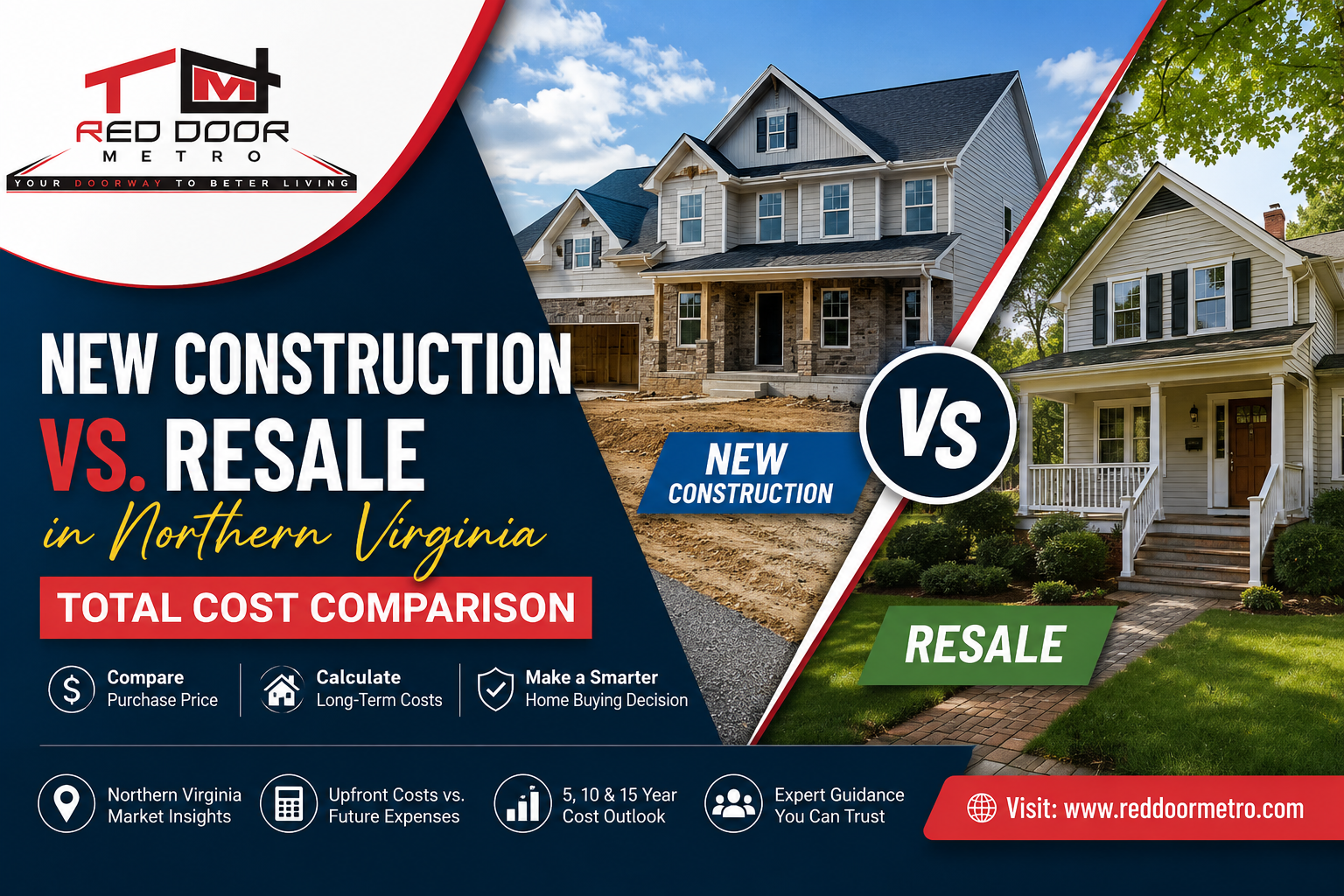
New construction vs. resale in Northern Virginia: a total cost comparison for homebuyers.
New Construction vs. Resale in Northern Virginia: Total Cost Comparison
The real cost of a home goes far beyond its listing price. Here’s how to compare new construction and resale homes before you buy.
Should you buy a brand-new home or a resale home in Northern Virginia? That question sounds simple until you start adding up the numbers.
A new construction home may offer a modern floor plan, newer systems and fewer immediate repair concerns. But the builder’s advertised base price may not include the lot premium, structural options, design-center upgrades, landscaping or other features you want.
A resale home may have a lower purchase price, but an aging roof, HVAC system, water heater, flooring or kitchen can quickly change the financial picture.
Is New Construction Cheaper Than Resale in Northern Virginia?
Not necessarily. A resale home can have a lower upfront price, while a new construction home can have lower early maintenance costs. Either one can become more expensive once all-in costs are considered.
The better comparison is not simply $700,000 new versus $650,000 resale. It is the amount you will realistically spend to purchase, personalize, maintain and own each property.
What Makes Northern Virginia Different?
Northern Virginia includes very different housing markets across Fairfax County, Loudoun County, Prince William County, Arlington, Alexandria and surrounding communities. A new home in Ashburn can have a very different cost structure from an older property in Fairfax or an established neighborhood in Centreville.
Buyers should consider commute, schools, transportation, lot size, HOA fees, property taxes, amenities and future development along with the age and condition of the home.
If you’re researching homes remotely, 3-D virtual tours can also help you understand a home’s layout before scheduling an in-person visit.
New Construction Costs Buyers Often Overlook
The biggest mistake with new construction is assuming the advertised base price represents the finished home you actually want.
Common New Construction Add-Ons
- Premium lot charges
- Structural options
- Upgraded flooring
- Kitchen cabinets and countertops
- Lighting and electrical upgrades
- Finished basements
- Decks and patios
- Appliance upgrades
- Landscaping and fencing
- Window treatments
Typical Resale Expenses
- Roof repairs or replacement
- HVAC replacement
- Water heater
- Older appliances
- Flooring and painting
- Kitchen improvements
- Bathroom remodeling
- Windows
- Electrical or plumbing updates
- Deferred maintenance
Before choosing a new construction home, ask the builder for a detailed list of what is included in the base price and what costs extra.
For a deeper look at builder options, read New Construction Builder Upgrades: Are They Worth It?
New Construction vs. Resale: Side-by-Side Cost Comparison
| Cost Category | New Construction | Resale |
|---|---|---|
| Purchase price | May increase substantially with options and lot premiums. | Usually reflects the finished property and current market conditions. |
| Upgrades | Can significantly increase the final price. | May already be included, or renovations may be needed. |
| Repairs | Often fewer immediate major repairs. | Depends heavily on age and maintenance history. |
| Landscaping | May require additional spending. | Often already established. |
| Warranty | Builder warranty may provide additional coverage, subject to terms. | Usually depends on existing warranties. |
| Customization | Potentially high during construction. | Usually requires renovation after purchase. |
A Hypothetical Northern Virginia Cost Example
Consider two hypothetical buyers looking at similar-sized homes. These numbers are illustrative only and are not Northern Virginia market averages.
Example A: New Construction
Base price: $700,000
Lot premium: $25,000
Structural/design upgrades: $45,000
Other additions: $10,000
Illustrative final price: $780,000
Example B: Resale
Purchase price: $735,000
Immediate updates: $15,000
Initial repairs: $10,000
Illustrative first-year investment: $760,000
In this simplified example, the resale home costs less initially. But if the resale property needs a major HVAC replacement, roof work or substantial remodeling within several years, its long-term cost could move closer to—or exceed—the new construction option.
5-Year, 10-Year and 15-Year Ownership Costs
Time horizon matters. A buyer planning to sell after three years should evaluate the decision differently from someone planning to stay for fifteen years.
| Period | New Construction | Resale |
|---|---|---|
| 5 years | Focus on upgrades, financing, taxes, HOA, landscaping and resale value. | Focus on repairs, renovations and aging systems. |
| 10 years | Routine maintenance becomes more significant. | Major systems may require replacement depending on their age. |
| 15 years | Maintenance and eventual component replacement become more important. | Older systems, renovations and major capital expenses can become substantial. |
Are New Construction Builder Upgrades Worth It?
Sometimes. The key is understanding which upgrades are difficult to add later and which are mostly cosmetic.
Structural changes, additional windows, electrical capacity and certain plumbing changes may make more sense during construction. Decorative lighting, paint and some finishes may be easier to change later.
Every upgrade should be evaluated based on cost, usefulness, durability and potential resale appeal.
Property Taxes, HOA Fees and Insurance
Recurring expenses can have a major impact on long-term affordability. Property taxes depend on the property’s assessed value and applicable local tax rates. HOA fees vary by community and can change over time. Insurance premiums depend on the property, coverage, location and insurer.
Before buying, obtain current HOA documents and verify the property’s tax information rather than relying solely on an online estimate.
Energy Efficiency and Utility Costs
Newer homes may incorporate newer insulation, windows, HVAC equipment and appliances. These features can potentially affect energy consumption, although actual utility costs vary by home size, household habits, weather, equipment and utility rates.
An older resale home can also be highly efficient if it has been renovated. Instead of assuming that “new means cheaper,” compare the actual systems, equipment and available utility information for each property.
New Construction vs. Resale: Which Is Better for You?
New Construction May Make Sense If You:
- Want a modern floor plan
- Prefer customization
- Want fewer immediate repair concerns
- Value builder warranty coverage
- Plan to stay several years
- Are comfortable budgeting for upgrades
Resale May Make Sense If You:
- Want an established neighborhood
- Prefer mature landscaping
- Want to see the finished property
- Prefer established lots
- Want more location flexibility
- Are comfortable budgeting for improvements
How to Compare Two Homes the Right Way
Instead of asking, “Which house is cheaper?” create an all-in comparison.
Start with the purchase price. Then add estimated closing costs, immediate improvements, HOA expenses, taxes, insurance, expected maintenance and any upgrades needed to make the home suitable for your household.
Next, consider how long you expect to own the property. A $20,000 renovation looks very different when spread across fifteen years than when you expect to sell after two or three years.
Finally, consider what cannot easily be captured in a spreadsheet: location, commute, floor plan, neighborhood, schools, lot, privacy and how well the home fits your lifestyle.
Questions to Ask Before Buying
- What exactly is included in the advertised new construction base price?
- What is the lot premium?
- How much should I budget for builder upgrades?
- What are the current HOA fees?
- What warranty does the builder provide?
- How old are the roof, HVAC system and water heater in the resale home?
- What repairs does the inspection identify?
- Are there upcoming HOA assessments?
- What future development is planned nearby?
- What is the realistic all-in cost before closing?
Final Verdict: New Construction or Resale in Northern Virginia?
There is no universal winner.
New construction can offer modern layouts, customization and fewer immediate maintenance concerns, but buyers need to look beyond the advertised base price. Lot premiums and builder upgrades can quickly change the final cost.
Resale homes can offer established neighborhoods, mature landscaping and potentially lower purchase prices, but buyers must account for the condition and remaining life of major systems and the cost of renovations.
For most Northern Virginia buyers, the smartest comparison is not new versus old. It is total cost versus total value.
If you’re comparing Northern Virginia properties, an experienced real estate professional can help you evaluate the purchase price, neighborhood, condition, potential improvements and long-term ownership considerations together.
Learn more about Red Door Metro’s team or explore more Northern Virginia real estate resources at Red Door Metro.