

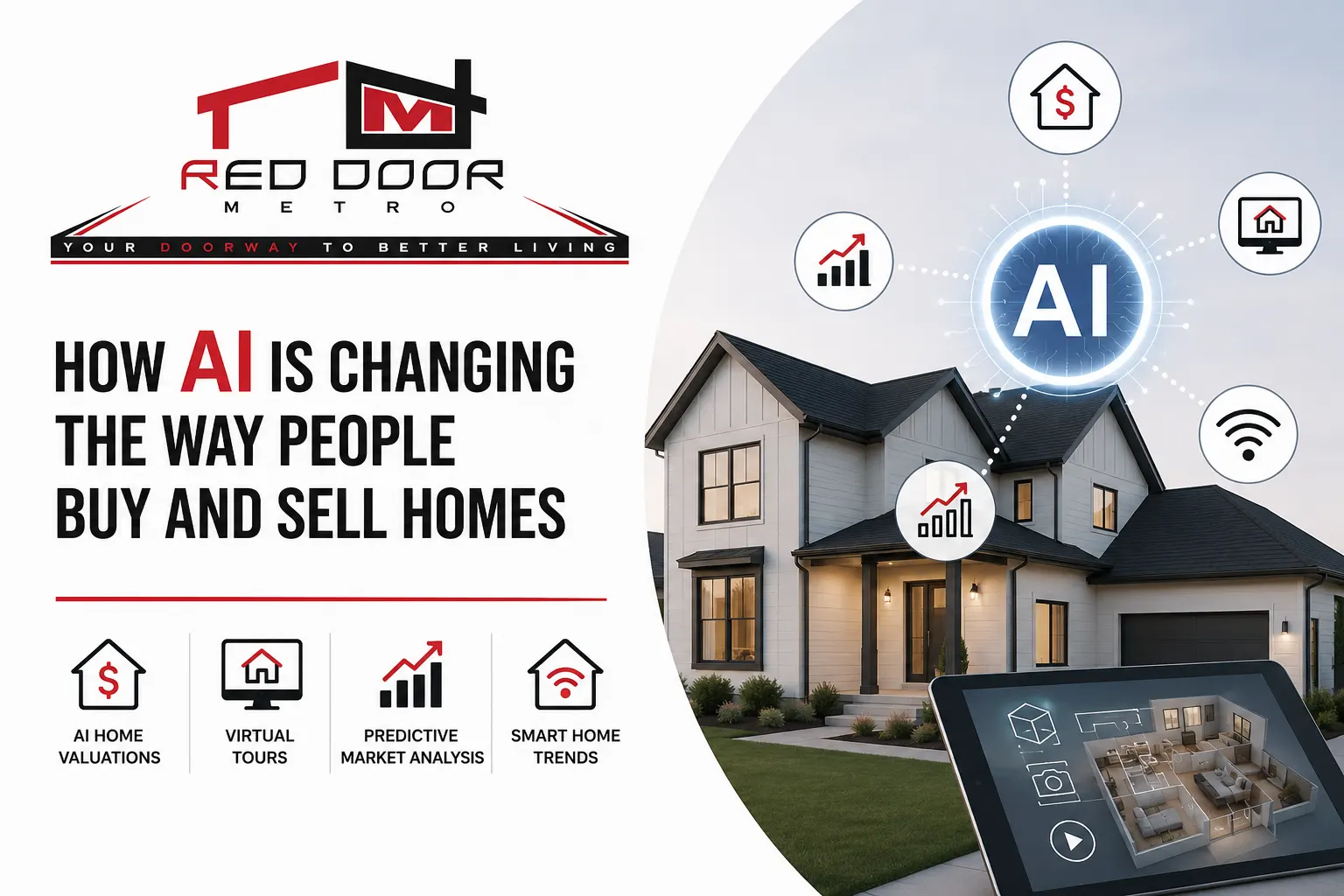
Artificial Intelligence (AI) is transforming many industries, and real estate is no exception. From helping buyers find the perfect property to assisting sellers in pricing their homes more accurately, AI is making the home buying and selling process faster, smarter, and more convenient.
Whether you’re a first-time homebuyer, a homeowner planning to sell, or a real estate investor, understanding how AI is changing the real estate market can help you make better decisions.
In this guide, we’ll explore how AI real estate technology, AI home search tools, and other innovations are reshaping the way people buy and sell homes.
What Is AI in Real Estate?
Artificial Intelligence refers to computer systems that can analyze data, recognize patterns, and perform tasks that normally require human intelligence.
In real estate, AI helps process large amounts of information such as:
- Property values
- Market trends
- Neighborhood data
- Buyer preferences
- Home features
- Mortgage information
These tools can provide insights much faster than traditional methods, helping buyers, sellers, and real estate professionals make more informed decisions.
Why AI Is Becoming Important in Real Estate
The real estate market generates a huge amount of data every day. Property listings, sales records, price changes, demographic trends, and economic factors all influence housing decisions.
AI can quickly analyze this information and provide useful recommendations.
Some benefits of AI in real estate include:
- Faster property searches
- More accurate home valuations
- Better market predictions
- Improved customer experiences
- Time savings for buyers and sellers
- Enhanced marketing strategies
As technology continues to evolve, AI is becoming an increasingly valuable tool throughout the real estate process.
AI Home Search: Finding the Right Property Faster
One of the biggest changes AI has brought to real estate is improving how people search for homes.
Personalized Property Recommendations
Traditional home searches often require buyers to manually filter listings based on price, location, and property type.
AI-powered platforms can go much further.
These systems analyze user behavior, including:
- Properties viewed
- Saved listings
- Search history
- Preferred neighborhoods
- Budget ranges
The AI then recommends homes that closely match the buyer’s interests.
This creates a more personalized experience and helps buyers discover properties they may have otherwise missed.
Smarter Search Results
AI can understand search intent better than traditional keyword-based systems.
For example, if someone searches for:
- Family-friendly neighborhoods
- Homes near top-rated schools
- Walkable communities
- Homes with home offices
AI can identify listings that fit those preferences even if the exact words are not included in the property description.
This makes finding the right home easier and more efficient.
Virtual Assistants and Chatbots
Many real estate websites now use AI-powered chatbots.
These tools can:
- Answer questions instantly
- Schedule property showings
- Provide listing information
- Recommend properties
- Connect users with agents
Buyers can receive assistance at any time of day without waiting for business hours.
AI Home Valuations: Improving Property Pricing
Determining the value of a home has always been one of the most important parts of the real estate process.
AI is helping make valuations more accurate and data-driven.
How AI Home Valuations Work
AI valuation tools analyze large amounts of information, including:
- Recent home sales
- Property size
- Lot size
- Number of bedrooms and bathrooms
- Location
- Market conditions
- Neighborhood trends
The system compares similar properties and generates an estimated market value.
Benefits for Sellers
For homeowners planning to sell, AI can help:
- Understand current market value
- Set realistic asking prices
- Avoid overpricing
- Reduce time on the market
Pricing a home correctly from the beginning can attract more buyers and improve the chances of a successful sale.
Benefits for Buyers
Buyers can also use AI-generated valuations to:
- Compare asking prices
- Identify potentially overpriced homes
- Understand local market conditions
- Make more informed offers
While AI valuations should not replace professional appraisals or expert advice, they can provide valuable insights during the buying process.
Virtual Tours: Touring Homes Without Leaving Home
One of the most visible uses of technology in real estate is the rise of virtual tours.
Virtual tours became especially popular in recent years and continue to be a powerful tool for buyers and sellers.
What Are Virtual Tours?
Virtual tours allow buyers to explore a property online using:
- 3D walkthroughs
- Interactive floor plans
- High-resolution photography
- Virtual reality experiences
Instead of relying solely on photos, buyers can move through rooms and get a better understanding of the home’s layout.
Benefits for Homebuyers
Virtual tours provide several advantages:
Save Time
Buyers can narrow down their options before scheduling in-person visits.
Explore Homes From Anywhere
People relocating from another city or state can view properties without traveling.
Better Property Understanding
Virtual tours often provide a more realistic representation of a home than traditional photos alone.
Benefits for Sellers
Sellers benefit because:
- Listings receive more attention online
- Buyers can view homes 24/7
- Serious buyers are easier to identify
- Marketing reach expands beyond local markets
Virtual tours have become an important part of modern real estate marketing.
Predictive Market Analysis: Forecasting Future Trends
Another exciting application of AI in real estate is predictive market analysis.
What Is Predictive Market Analysis?
Predictive analysis uses historical data and current market conditions to estimate future trends.
AI examines factors such as:
- Home prices
- Inventory levels
- Interest rates
- Employment data
- Population growth
- Local development projects
Based on these patterns, AI can identify potential market opportunities and risks.
Benefits for Buyers
Predictive analysis can help buyers:
- Understand market conditions
- Identify emerging neighborhoods
- Determine optimal buying times
- Evaluate long-term investment potential
Benefits for Sellers
Sellers may use predictive insights to:
- Time their listing strategically
- Monitor demand trends
- Understand pricing opportunities
- Anticipate market changes
Although no prediction is guaranteed, AI provides valuable information that can support better decision-making.
Smart Home Trends and AI
AI is not only changing how homes are bought and sold—it is also influencing the homes themselves.
Smart home technology continues to grow in popularity among homeowners and buyers.
What Is a Smart Home?
A smart home uses internet-connected devices that can automate or remotely control various systems.
Common smart home features include:
- Smart thermostats
- Video doorbells
- Security cameras
- Smart locks
- Automated lighting
- Voice assistants
Many of these systems use AI to learn user preferences and improve efficiency over time.
Why Buyers Like Smart Homes
Modern buyers often value convenience, efficiency, and security.
Smart home features can offer:
Energy Savings
Smart thermostats can optimize heating and cooling schedules.
Enhanced Security
Smart cameras and monitoring systems provide real-time alerts.
Increased Convenience
Homeowners can control many devices using smartphones or voice commands.
Future-Ready Living
Many buyers view smart technology as an attractive long-term investment.
Impact on Property Value
While smart features do not automatically increase a home’s value significantly, they can make a property more attractive to certain buyers and help it stand out in a competitive market.
How Real Estate Agents Are Using AI
AI is not replacing real estate agents. Instead, it is helping them work more efficiently.
Agents use AI tools for:
- Market research
- Lead generation
- Property recommendations
- Marketing automation
- Customer communication
- Data analysis
This allows agents to spend more time helping clients and less time handling repetitive tasks.
The human element remains essential because buying or selling a home often involves emotional and financial decisions that require professional guidance.
Potential Limitations of AI in Real Estate
While AI offers many advantages, it is important to understand its limitations.
Data Quality Matters
AI systems depend on accurate information.
If data is outdated or incomplete, results may not be reliable.
Local Expertise Is Still Important
Neighborhood characteristics, community culture, and unique property features may not always be fully captured by AI tools.
Market Conditions Can Change Quickly
Unexpected economic events, interest rate changes, or local developments can affect housing markets in ways that are difficult to predict.
For this reason, AI should be viewed as a decision-support tool rather than a replacement for professional advice.
The Future of AI Real Estate
AI technology is expected to continue evolving in the years ahead.
Future innovations may include:
- More advanced property recommendations
- Improved virtual reality experiences
- Enhanced market forecasting
- Faster mortgage processing
- Better fraud detection
- Increased personalization throughout the buying and selling process
As these tools become more sophisticated, consumers can expect a smoother and more efficient real estate experience.
Final Thoughts
Artificial Intelligence is reshaping the real estate industry in meaningful ways. From AI home search tools and AI home valuations to virtual tours, predictive market analysis, and smart home technology, AI is helping buyers and sellers make more informed decisions.
While technology continues to advance, successful real estate transactions still benefit from professional expertise, local market knowledge, and human guidance. The most effective approach combines the power of AI with the experience of trusted real estate professionals.
As the adoption of AI real estate technology continues to grow, buyers and sellers who understand these tools will be better prepared to navigate today’s evolving housing market.