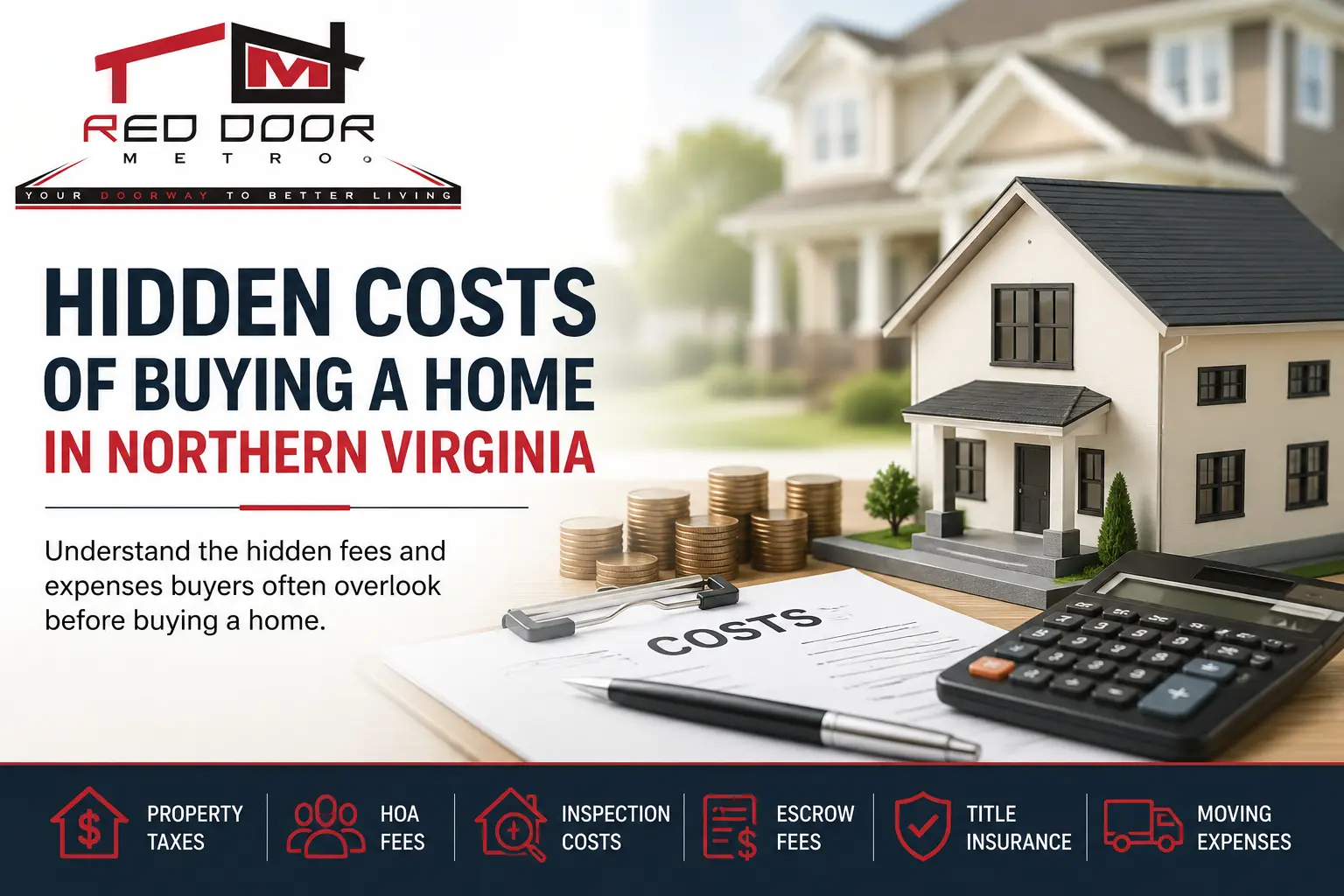
Buying a home in Northern Virginia is exciting, but many buyers quickly realize the purchase price is not the only expense involved. A lot of first-time buyers focus mainly on the down payment and monthly mortgage payment while overlooking several additional costs that can add thousands of dollars to the total amount spent.
Northern Virginia is one of the most competitive real estate markets in the country, and hidden homeowner expenses can catch buyers off guard if they are not prepared. Understanding the real home buying costs in Virginia can help buyers budget properly and avoid financial stress after closing.
This guide explains the most common hidden costs of buying a home in Northern Virginia, including property taxes, HOA fees, inspection costs, escrow fees, title insurance, moving expenses, and more.
Why Buyers Underestimate Home Buying Costs in Virginia
Many buyers assume they only need enough money for:
- The down payment
- Monthly mortgage payments
In reality, there are several additional costs involved before, during, and after closing.
Some expenses happen one time, while others continue every month or every year. In Northern Virginia, where home prices are higher than many other parts of the country, these extra costs can become significant.
Closing Costs in Northern Virginia
Closing costs are one of the biggest surprises for homebuyers.
These are the fees and expenses paid when the property officially transfers from the seller to the buyer.
Typical Closing Costs Include
- Loan origination fees
- Escrow fees
- Title insurance
- Attorney fees
- Recording fees
- Prepaid taxes
- Homeowners insurance
- Mortgage-related charges
In Northern Virginia, closing costs often range between 2% and 5% of the home purchase price.
Example
If you buy a $700,000 home, your closing costs could easily range from:
- $14,000 to $35,000
This amount is separate from your down payment.
Property Taxes in Northern Virginia
Property taxes are one of the most important ongoing hidden homeowner expenses.
Every county and city in Northern Virginia has different tax rates.
Areas With Property Taxes
Property taxes vary in places such as:
- Fairfax County
- Arlington County
- Loudoun County
- Alexandria
- Prince William County
Buyers moving from lower-tax states are often surprised by the yearly tax bill.
How Property Taxes Affect Monthly Payments
Many lenders include property taxes inside the monthly mortgage payment through an escrow account.
This means your monthly payment may be much higher than expected.
Tax Increases Over Time
Property taxes can also increase as:
- Home values rise
- County assessments increase
- Local tax rates change
A home that seems affordable today may cost more to maintain in future years.
HOA Fees in Northern Virginia
Homeowners Association fees are very common in Northern Virginia communities.
Many condos, townhomes, and planned neighborhoods require monthly or yearly HOA payments.
What HOA Fees Cover
HOA fees may include:
- Landscaping
- Snow removal
- Community pools
- Clubhouses
- Trash collection
- Exterior maintenance
- Security services
HOA Costs Can Be Expensive
Some HOA fees are relatively small, while luxury communities may charge several hundred dollars each month.
Condo buildings often have especially high HOA fees because they maintain:
- Elevators
- Parking garages
- Shared amenities
- Building repairs
HOA Special Assessments
One hidden risk buyers often overlook is special assessments.
If the HOA does not have enough reserve funds for major repairs, homeowners may receive unexpected bills for:
- Roof replacement
- Structural repairs
- Parking lot resurfacing
- Plumbing upgrades
These costs can reach thousands of dollars.
Home Inspection Costs
A home inspection is one of the smartest investments during the buying process, but it still adds to the overall home buying costs in Virginia.
Average Inspection Costs
In Northern Virginia, buyers may pay several hundred dollars for:
- General home inspections
- Radon testing
- Mold inspections
- Termite inspections
- Sewer line inspections
Why Inspections Matter
Skipping inspections to make an offer more competitive can become extremely expensive later.
An inspection may uncover:
- Roof damage
- Foundation issues
- Plumbing leaks
- Electrical problems
- HVAC system failures
Repair costs after closing can easily exceed the inspection fee many times over.
Escrow Fees
Escrow fees are another common closing expense buyers often do not expect.
Escrow companies help manage the financial side of the transaction and ensure all documents and funds are handled properly.
What Escrow Fees Cover
Escrow services may include:
- Holding buyer funds securely
- Coordinating payments
- Managing paperwork
- Recording documents
- Finalizing closing details
Escrow fees vary depending on:
- Purchase price
- Loan type
- Service provider
Title Insurance Costs
Title insurance protects buyers and lenders from ownership disputes or legal claims involving the property title.
This is usually a required part of closing costs in Northern Virginia.
Why Title Insurance Matters
Title problems can include:
- Unpaid liens
- Ownership disputes
- Clerical errors
- Fraud issues
- Unknown heirs claiming ownership
Without title insurance, buyers could face serious legal and financial problems later.
Two Types of Title Insurance
Lender’s Title Insurance
Protects the mortgage lender.
Owner’s Title Insurance
Protects the buyer.
Although owner’s title insurance is technically optional in some cases, many buyers choose it for long-term protection.
Mortgage-Related Hidden Costs
Mortgage expenses often go beyond the advertised interest rate.
Loan Origination Fees
Some lenders charge fees for:
- Processing the loan
- Underwriting
- Administrative services
Appraisal Fees
Lenders usually require a professional appraisal to verify the home’s value.
Private Mortgage Insurance (PMI)
Buyers putting down less than 20% may have to pay PMI monthly.
PMI can significantly increase the total monthly payment.
Homeowners Insurance Costs
Homeowners insurance is required by most lenders.
Insurance costs vary based on:
- Property value
- Location
- Coverage limits
- Claims history
- Flood risk
Some Northern Virginia homes may require additional coverage for:
- Flooding
- Storm damage
- Water backup
Utility Costs After Buying a Home
Many buyers underestimate how much utilities can cost in larger homes.
Expenses may include:
- Electricity
- Water
- Gas
- Internet
- Trash collection
- Sewer services
Older homes may have higher utility bills due to outdated insulation or aging HVAC systems.
Maintenance and Repair Costs
Owning a home means handling repairs yourself.
Unlike renting, homeowners are responsible for:
- Roof repairs
- Plumbing issues
- Appliance replacement
- HVAC maintenance
- Landscaping
- Gutter cleaning
The 1% Rule
Many financial experts recommend budgeting around 1% of the home’s value annually for maintenance.
For example:
- A $800,000 home may require about $8,000 yearly in maintenance and repairs.
Moving Expenses
Moving costs are another commonly overlooked expense.
Common Moving Costs
Buyers may spend money on:
- Professional movers
- Moving trucks
- Packing supplies
- Temporary storage
- Furniture replacement
- Cleaning services
Long-distance relocations into Northern Virginia can become especially expensive.
Furniture and Home Upgrades
After buying a home, many buyers immediately spend more money on:
- New furniture
- Appliances
- Window treatments
- Paint
- Flooring upgrades
- Smart home devices
These purchases add up quickly, especially in larger homes.
Commuting Costs in Northern Virginia
Northern Virginia traffic is well known for being expensive and time-consuming.
Buyers should also consider:
- Gas expenses
- Toll roads
- Metro parking
- Public transportation costs
- Vehicle wear and tear
Living farther from Washington, DC may lower housing costs but increase commuting expenses significantly.
Emergency Fund Importance for Homeowners
One of the biggest mistakes buyers make is spending all their savings on the down payment and closing costs.
Unexpected problems can happen shortly after moving in, including:
- HVAC breakdowns
- Water leaks
- Appliance failures
- Emergency repairs
Having an emergency fund is extremely important for new homeowners.
Tips to Reduce Hidden Home Buying Expenses
Compare Multiple Lenders
Different lenders offer different:
- Interest rates
- Closing costs
- Loan fees
Shopping around can save thousands of dollars.
Review HOA Documents Carefully
Before buying, buyers should review:
- HOA budgets
- Reserve funds
- Rules and restrictions
- Upcoming assessments
Budget Beyond the Mortgage Payment
Monthly housing costs should include:
- Taxes
- Insurance
- HOA fees
- Utilities
- Maintenance
Avoid Draining Savings Completely
Leaving room in your budget for emergencies helps reduce financial stress after closing.
Why Understanding Hidden Homeowner Expenses Matters
Northern Virginia is a competitive and expensive housing market. Buyers who only focus on the listing price often underestimate the true cost of homeownership.
Understanding the full picture of home buying costs in Virginia helps buyers:
- Create realistic budgets
- Avoid financial surprises
- Make smarter purchasing decisions
- Prepare for long-term ownership expenses
Planning ahead can make the home buying process smoother and more financially manageable.
Final Thoughts
Buying a home in Northern Virginia involves much more than just a down payment and mortgage payment. Closing costs, property taxes, HOA fees, inspection costs, escrow fees, title insurance, and moving expenses can all add thousands of dollars to the total cost of homeownership.
By understanding these hidden homeowner expenses early, buyers can prepare financially and avoid common surprises during the buying process.
Whether you are purchasing your first condo, a townhouse, or a luxury home, knowing the real closing costs in Northern Virginia can help you make more confident and informed decisions throughout your home buying journey.