
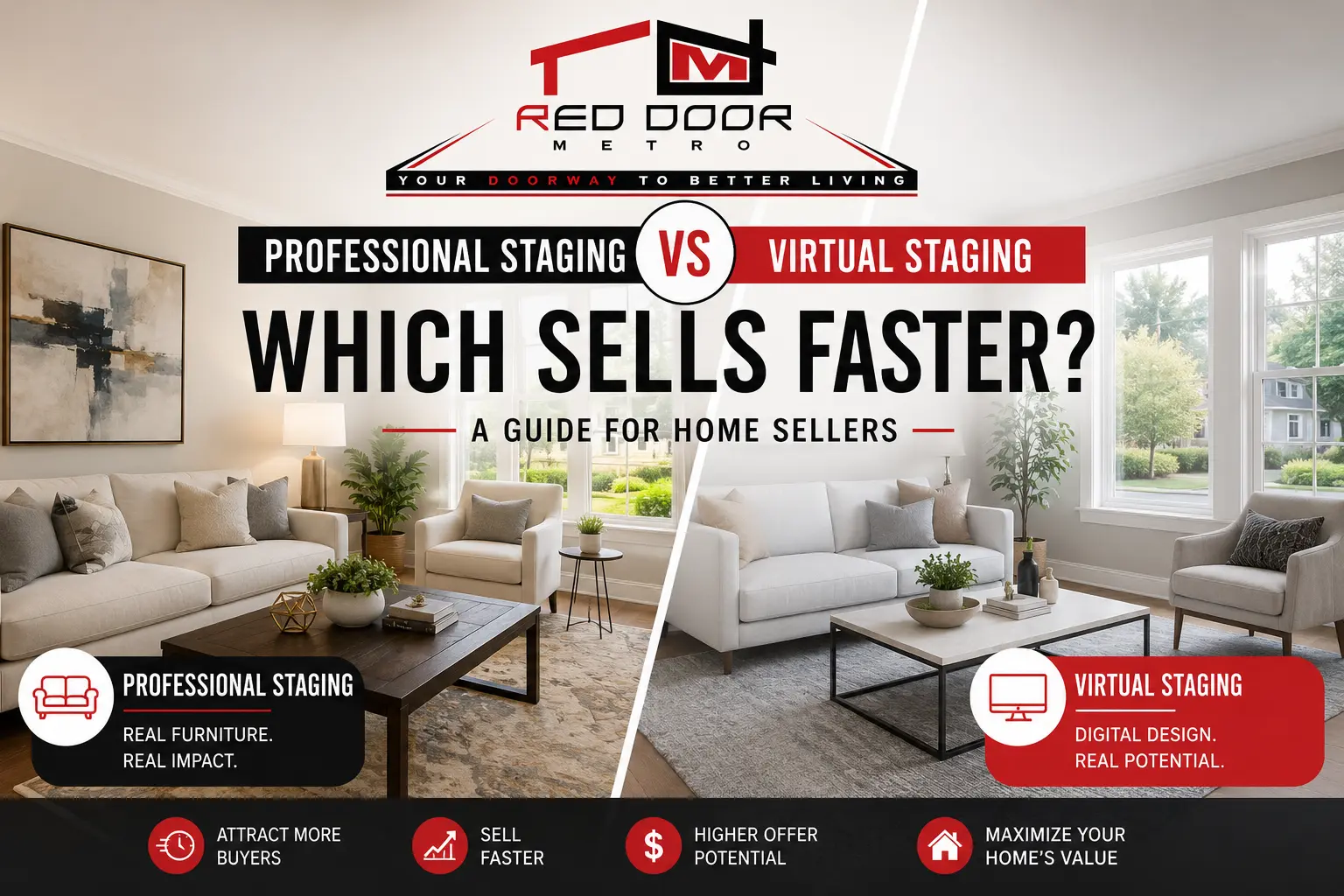
Selling a home in today’s real estate market is about more than simply putting a property online and waiting for buyers to appear. Presentation matters. Buyers often decide how they feel about a home within seconds of viewing listing photos or walking through the front door.
That is why staging has become one of the most important marketing tools in residential real estate.
But many sellers now face a common question:
Should you use professional staging or virtual staging?
Both options can help a property look more appealing, attract more buyers, and potentially sell faster. However, they work very differently and each comes with advantages and drawbacks.
If you are preparing to sell a home in Northern Virginia or the greater Washington metro area, understanding the difference between professional staging and virtual staging can help you make the right decision for your property and budget.
What Is Professional Home Staging?
Professional staging involves physically furnishing and decorating a property to make it more attractive to buyers.
A staging company may bring in:
- furniture
- rugs
- artwork
- lighting
- décor
- plants
- accessories
The goal is to create a clean, modern, welcoming environment that helps buyers emotionally connect with the home.
Professional staging is commonly used for:
- vacant homes
- luxury listings
- model homes
- high-end properties
- difficult floor plans
Staged homes are then photographed and shown to buyers during in-person tours.
What Is Virtual Staging?
Virtual staging uses digital editing technology to add furniture and décor into listing photos.
Instead of physically moving furniture into the property, designers digitally create staged images that appear furnished online.
Virtual staging can:
- furnish empty rooms
- modernize outdated interiors
- show room functionality
- help buyers visualize layouts
It is primarily used for online marketing and listing photos.
However, buyers visiting the home in person will still see the actual empty or unstaged property.
Why Staging Matters in Real Estate
Most buyers begin their home search online. Listing photos are often the first impression a property makes.
Homes that appear:
- bright
- spacious
- modern
- clean
- functional
typically generate more interest and more showings.
Staging helps buyers:
- emotionally connect with the home
- understand room sizes
- imagine furniture placement
- visualize how they would live in the space
In competitive real estate markets like Northern Virginia, presentation can directly influence:
- showing activity
- buyer interest
- time on market
- offer strength
Does Staging Really Help Homes Sell Faster?
In many cases, yes.
Well-presented homes often:
- attract more online clicks
- receive more showings
- generate stronger offers
- spend fewer days on the market
Buyers are naturally drawn toward listings that look move-in ready and visually appealing.
Even small visual improvements can make a major difference in:
- buyer perception
- emotional response
- perceived home value
Professional Staging: Pros and Cons
Advantages of Professional Staging
1. Buyers Experience the Home in Real Life
One of the biggest advantages of physical staging is that buyers can see the furnished property during showings.
This helps create:
- emotional connection
- warmth
- scale perception
- lifestyle appeal
An empty room often feels smaller and less inviting.
2. Luxury Homes Often Benefit More
Higher-end buyers typically expect professionally staged properties.
Luxury homes may feel cold or unfinished without furniture.
Professional staging can help emphasize:
- architectural details
- open layouts
- premium finishes
- entertaining spaces
This is especially important in competitive luxury markets around Northern Virginia.
3. Better for Difficult Floor Plans
Some homes have:
- awkward layouts
- oversized rooms
- unusual spaces
Professional staging helps buyers understand:
- room purpose
- furniture placement
- traffic flow
Without staging, buyers may struggle to visualize how spaces function.
4. Stronger Emotional Impact
Physical staging creates a sensory experience that online photos alone cannot fully replicate.
Buyers walking into a beautifully staged home may feel:
- comfort
- aspiration
- excitement
That emotional reaction can increase buyer urgency.
Disadvantages of Professional Staging
1. Higher Cost
Professional staging is usually more expensive than virtual staging.
Costs may include:
- furniture rental
- design services
- delivery fees
- setup fees
- monthly rental charges
Large or luxury homes can become expensive to stage fully.
2. Scheduling and Logistics
Physical staging requires:
- moving furniture
- coordinating schedules
- setup time
- removal after sale
This process can delay listing preparation.
3. Ongoing Costs
If the home sits on the market longer than expected, staging rental fees may continue accumulating monthly.
Virtual Staging: Pros and Cons
Advantages of Virtual Staging
1. Much More Affordable
Virtual staging costs significantly less than physical staging.
This makes it attractive for:
- budget-conscious sellers
- vacant condos
- starter homes
- investment properties
2. Faster Turnaround
Digitally staged photos can often be completed quickly.
There is:
- no furniture delivery
- no installation
- no scheduling complexity
This allows listings to go live faster.
3. Excellent for Online Marketing
Since most buyers begin online, visually appealing photos are extremely important.
Virtual staging helps listings:
- stand out
- look modern
- attract clicks
- generate interest
A vacant property often performs poorly online compared to furnished listings.
4. Flexible Design Styles
Virtual staging allows designers to create:
- modern interiors
- luxury aesthetics
- family-friendly spaces
- minimalist designs
This flexibility can help target specific buyer demographics.
Disadvantages of Virtual Staging
1. Buyers May Feel Disappointed In Person
One common issue with virtual staging is buyer expectation mismatch.
If buyers fall in love with beautifully staged photos but arrive at an empty property, they may feel:
- confused
- disappointed
- emotionally disconnected
This can reduce enthusiasm during showings.
2. Limited Emotional Experience
Unlike physical staging, virtual staging only exists online.
It does not create:
- atmosphere
- warmth
- physical scale perception
during in-person tours.
3. Overediting Can Backfire
Poorly done virtual staging can appear:
- unrealistic
- misleading
- artificial
Buyers may lose trust if listing photos look dramatically different from reality.
Which Type of Staging Sells Faster?
The answer depends on:
- property type
- price point
- local market conditions
- competition
- buyer expectations
However, professionally staged homes often perform better for in-person buyer experience, especially in:
- luxury markets
- vacant homes
- competitive neighborhoods
Virtual staging is usually most effective when:
- budget matters
- the property is lower-priced
- speed is important
- online marketing is the primary focus
Best Situations for Professional Staging
Professional staging may be the better choice if:
- the home is luxury-priced
- rooms are unusually shaped
- the property is vacant
- the target buyer expects premium presentation
- the home needs emotional warmth
Higher-end listings often benefit most from physical staging because buyers expect a polished experience.
Best Situations for Virtual Staging
Virtual staging may work best when:
- the budget is limited
- the property is entry-level
- the seller needs quick listing photos
- the home is already partially furnished
- online appearance is the main concern
It can also work well for:
- condos
- investment properties
- rental conversions
- vacant apartments
Hybrid Staging Is Becoming More Popular
Many agents now combine both approaches.
For example:
- main living spaces may be physically staged
- secondary rooms may be virtually staged
- vacant rooms may receive digital furniture
- occupied homes may use light professional staging
This hybrid approach balances:
- cost
- presentation quality
- online marketing effectiveness
What Buyers Notice Most During Showings
Buyers typically focus heavily on:
- cleanliness
- lighting
- furniture scale
- room flow
- storage space
- natural light
- overall atmosphere
Whether using professional or virtual staging, the goal is to make the home feel:
- inviting
- spacious
- functional
- move-in ready
Common Staging Mistakes Sellers Make
Overcrowding Rooms
Too much furniture makes rooms feel smaller.
Using Outdated Décor
Old furniture or heavy styling can make homes feel dated.
Ignoring Curb Appeal
The exterior matters just as much as the interior.
Leaving Personal Items Everywhere
Buyers want to imagine themselves in the home, not feel like guests in someone else’s house.
Using Unrealistic Virtual Staging
Overly edited images can damage credibility.
Is Staging Worth the Investment?
For many sellers, staging can produce strong returns by helping:
- homes sell faster
- listings stand out
- buyers engage emotionally
- offers become more competitive
In slower markets, strong presentation becomes even more important because buyers compare many listings online before scheduling tours.
Final Thoughts
Both professional staging and virtual staging can help homes sell faster, but they serve different purposes.
Professional staging creates a powerful in-person buyer experience and is often ideal for luxury or vacant homes.
Virtual staging offers a faster and more affordable way to improve listing photos and attract online attention.
The right choice depends on:
- your budget
- your timeline
- your property type
- your target buyers
- your local market conditions
In competitive areas like Northern Virginia, strong presentation can make a major difference in how quickly a home sells and how buyers respond to the listing.