

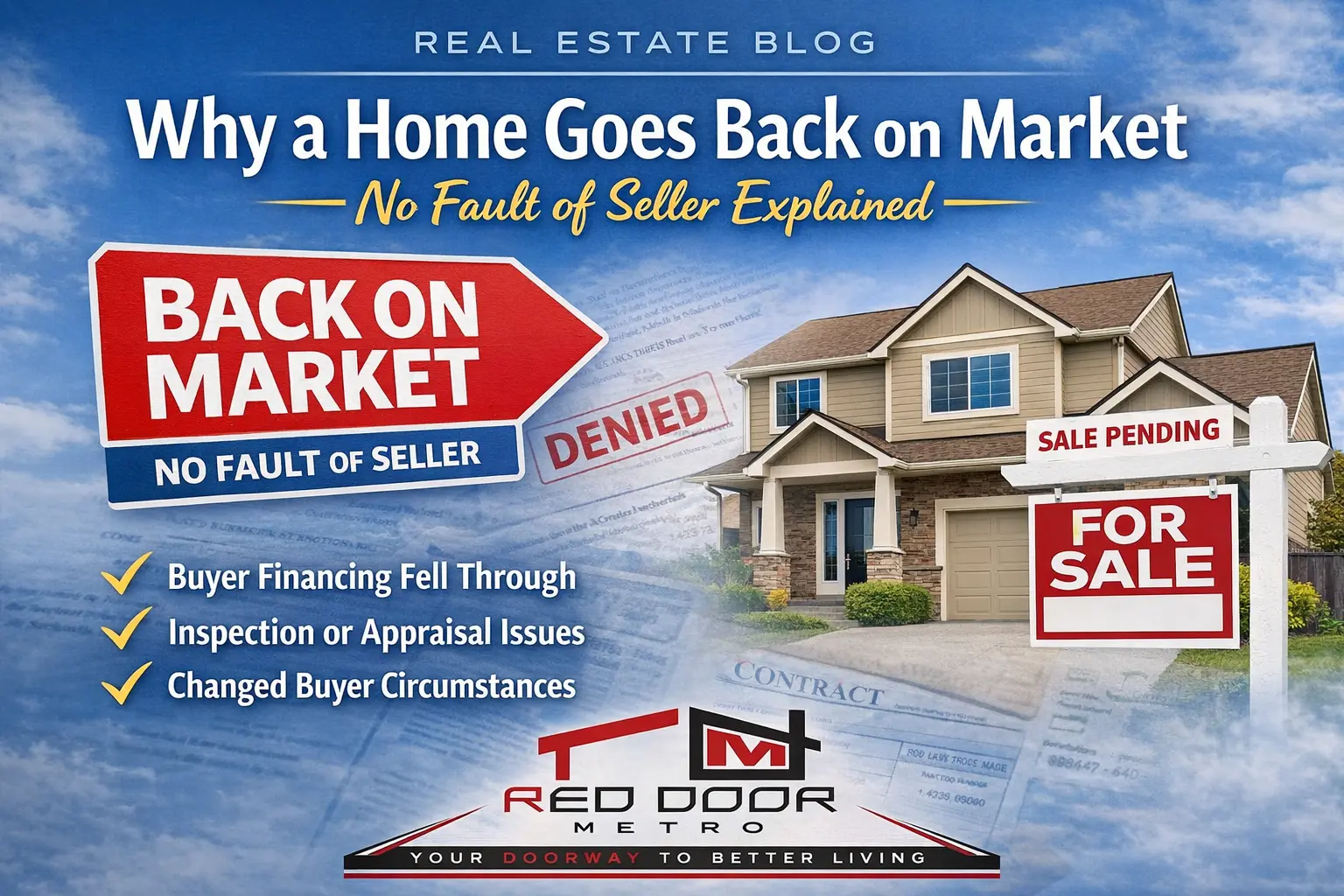

When buyers see a home listed as “Back on Market – No Fault of Seller” on Zillow, many assume something must be wrong with the property. In reality, that label often has nothing to do with the condition, price, or integrity of the home.
Homes frequently return to the market because of buyer-side issues, financing breakdowns, or unmet contingencies, even when sellers have done everything right. For real estate professionals, understanding—and clearly explaining—this status helps maintain buyer confidence and protects sellers from unnecessary stigma.
Back on Market Meaning in Real Estate Listings
In simple terms, back on market means a property:
-
Was under contract
-
The contract was canceled or terminated
-
The home is now active and available again
MLS systems and platforms like Zillow may display variations such as:
-
Back on Market
-
Active Again
-
Back on Market – No Fault of Seller
The “no fault of seller” designation signals that the transaction failed due to factors outside the seller’s control.
What “No Fault of Seller” Really Indicates
When a listing is marked back on market no fault of seller, it generally means:
-
The seller complied with all contract terms
-
Required disclosures were provided
-
Property access and inspections were allowed
-
No seller breach occurred
The deal ended because of buyer performance, financing, or contingency issues, not because of defects or misrepresentation.
Most Common Reason: BOM Due to Buyer Financing
Why Buyer Financing Falls Apart
The most frequent reason a home goes back on market is BOM due to buyer financing. Even well-qualified buyers can lose loan approval during underwriting.
Common financing-related causes include:
-
Final loan denial by the lender
-
Employment or income changes
-
Credit score drops after pre-approval
-
New debt taken on before closing
-
Appraisal coming in below contract price
When financing fails, the contract is typically terminated under the financing contingency—with no fault attributed to the seller.
Other Buyer-Related Reasons Homes Return to Market
Buyer Could Not Sell Their Existing Home
Many contracts include a home-sale contingency. If the buyer’s current property does not sell on time, the buyer may be unable to proceed, forcing the contract to cancel.
Inspection Contingency Withdrawals
A buyer may walk away during the inspection phase even if:
-
Issues are minor or expected
-
Repair requests are denied or negotiated
-
The buyer reassesses the purchase emotionally
Not every inspection cancellation reflects a serious property problem. Often, it reflects buyer expectations rather than property condition.
Appraisal Challenges
An appraisal is based on comparable sales, not contract price. If the appraisal is lower:
-
Lenders may reduce loan amounts
-
Buyers may lack funds to cover the gap
-
Contracts may terminate under appraisal contingency
This is market-driven and not a seller failure.
Buyer Missed Contractual Deadlines
If a buyer fails to:
-
Submit earnest money
-
Secure financing approval
-
Meet contingency timelines
The seller may legally cancel and relist the property, resulting in a no fault of seller designation.
Personal or Life Changes
Unexpected life events can cause buyers to exit contracts, including:
-
Job changes or relocations
-
Family emergencies
-
Financial instability
These situations have no connection to the property itself.
Why Zillow and MLS Platforms Use the “No Fault of Seller” Label
Real estate platforms include this status to:
-
Improve transparency
-
Reduce buyer misconceptions
-
Accurately reflect contract termination reasons
-
Protect sellers from unfair assumptions
For agents and brokers, this label is critical for preserving listing credibility.
Is a Back-on-Market Home a Red Flag for Buyers?
Not necessarily.
Many back-on-market properties:
-
Passed inspections
-
Were previously approved by lenders
-
Are priced appropriately
-
Are move-in ready
Often, the only issue was that the original buyer could not perform.
For savvy buyers, these listings can represent strong opportunities—especially when prior contingencies have already been addressed.
How Agents Should Position Back-on-Market Listings
For real estate professionals, communication is key. Best practices include:
-
Clearly explaining why the home returned to market
-
Highlighting “no fault of seller” status
-
Reassuring buyers with factual context
-
Avoiding unnecessary price reductions
Transparency builds trust and prevents lost momentum.
Key Takeaway
A home going back on market on Zillow—especially when marked no fault of seller—is usually the result of buyer financing issues or unmet contingencies, not property defects.
Understanding the true back on market meaning helps buyers make informed decisions and helps sellers avoid unnecessary concern.
In today’s lending environment, BOM due to buyer financing is increasingly common—and should be viewed as part of the normal real estate process, not a warning sign.
FAQs
What does “back on market – no fault of seller” mean?
It means the home was previously under contract, but the transaction was terminated due to buyer-related issues or unmet contingencies, not because of any action or failure by the seller. The seller complied with all contractual obligations, and the property remains a valid, marketable listing.
Is a back-on-market home a red flag for buyers?
No. A home going back on market—especially with a no fault of seller designation—does not automatically indicate problems with the property. In many cases, the home passed inspections and progressed well into escrow before the buyer could not proceed.
What is the most common reason a home goes back on market?
The most common reason is BOM due to buyer financing. Even buyers who are pre-approved can lose financing during underwriting because of income changes, credit issues, new debt, or appraisal shortfalls.
How should agents explain BOM due to buyer financing to clients?
Agents should clarify that:
-
Pre-approval is not final loan approval
-
Lenders reassess finances multiple times before closing
-
Financing can fail despite a strong offer
This helps buyers understand that financing issues are outside the seller’s control and unrelated to the home’s condition.
Does a failed inspection usually mean the home has serious defects?
Not necessarily. Inspection-related cancellations can occur because:
-
Buyers have unrealistic expectations
-
Repair negotiations stall
-
Buyers experience hesitation or cold feet
Many inspection findings are normal for the age of the home and do not indicate major problems.
Why do some homes come back on market after appraisal?
If the appraisal comes in below the contract price:
-
The lender may reduce the loan amount
-
The buyer may not have funds to bridge the gap
-
The buyer may terminate under the appraisal contingency
This reflects market valuation dynamics, not seller misrepresentation.
How can agents reassure buyers about a back-on-market listing?
Agents should:
-
Share the termination reason when permissible
-
Highlight “no fault of seller” status
-
Emphasize completed inspections or disclosures
-
Reinforce that the home remains fully available and marketable
Clear communication reduces buyer hesitation.
Should sellers reduce the price when a home goes back on market?
Not automatically. If the home returned to market due to buyer financing or contingency failure, a price reduction may be unnecessary. Agents should reassess market conditions before recommending any changes.
How should agents position a back-on-market home in marketing?
Effective positioning includes:
-
Transparent explanation in agent remarks
-
Emphasizing clean contract termination
-
Highlighting strong showing history
-
Reinforcing property condition and value
This helps preserve listing momentum.
Does Zillow’s “no fault of seller” label help listing credibility?
Yes. The label improves transparency and helps prevent buyer assumptions that something is wrong with the property. It signals that the deal fell apart for reasons unrelated to the seller or home quality.
Can back-on-market homes attract strong new offers?
Absolutely. Many back-on-market listings receive competitive offers because:
-
Buyers know the seller is motivated
-
The home has already been market-tested
-
Some contingencies may already be resolved
Savvy buyers often view these listings as opportunities.
What is the biggest mistake agents make with back-on-market listings?
The biggest mistake is not proactively explaining why the home returned to market. Silence creates uncertainty, while transparency builds confidence and keeps buyers engaged.
How should agents explain this to nervous sellers?
Agents should reassure sellers that:
-
Back-on-market status is common
-
Financing failures are increasing industry-wide
-
The home remains fully marketable
-
The seller did nothing wrong
Education helps sellers stay confident and patient.