

Many people use the words luxury home and mansion as if they mean the same thing. While they often overlap, they are not identical. A mansion is usually known for its large size, while a luxury home is defined by its quality, location, design, craftsmanship, privacy, and lifestyle. In other words, a house does not have to be enormous to be considered luxurious.
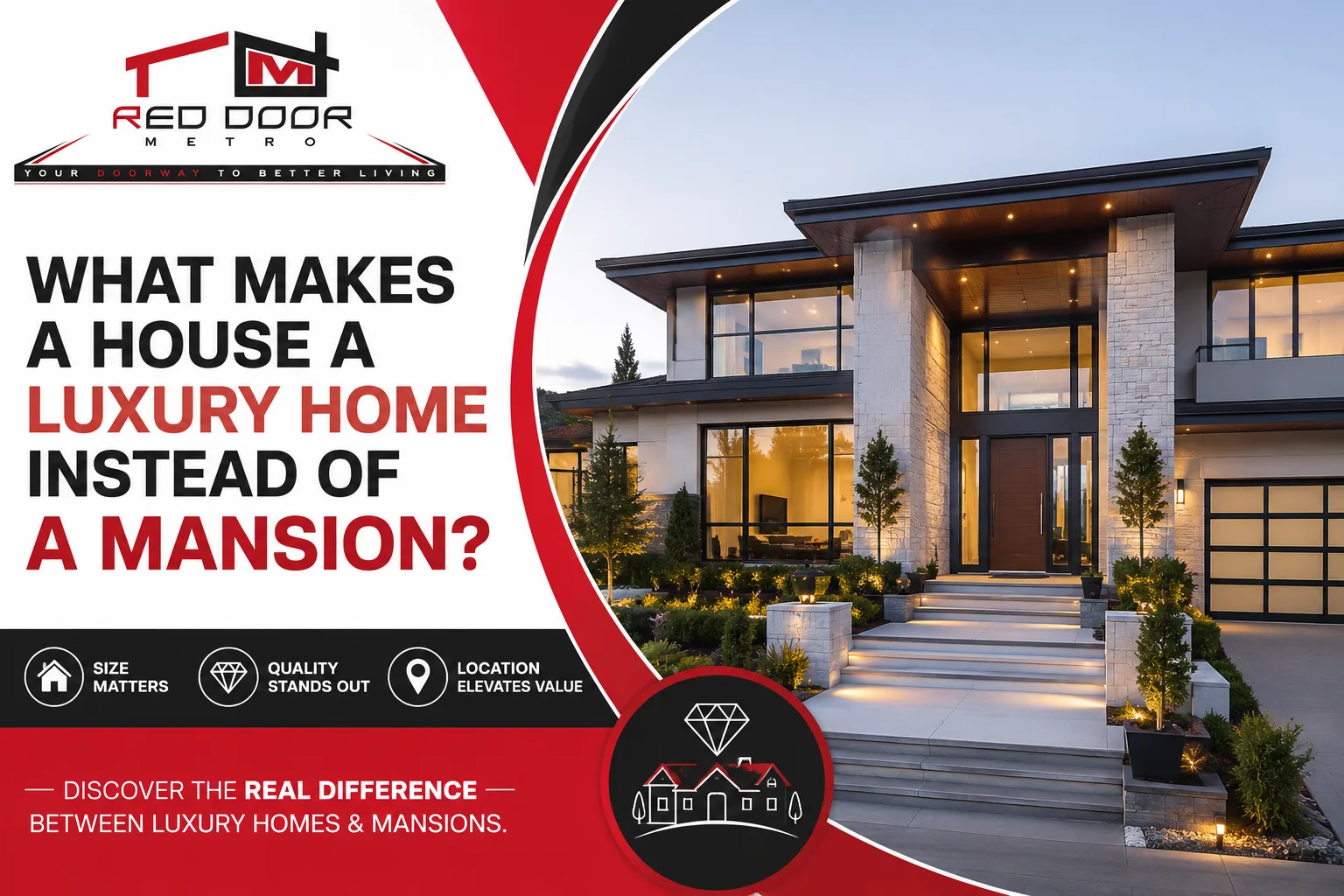

A beautifully designed waterfront home with premium finishes and smart technology may be a luxury home even if it is much smaller than a traditional mansion. Likewise, a very large house may not qualify as a luxury property if it lacks modern features, quality construction, or an exclusive location.
Understanding the difference between a luxury home vs mansion can help buyers, sellers, and investors make more informed real estate decisions. In this guide, you’ll learn the luxury house definition, the characteristics of each property type, and what truly makes a home stand out in today’s luxury real estate market.
What Is a Luxury Home?
A luxury home is a property that offers an exceptional level of comfort, quality, exclusivity, and lifestyle. There is no single rule that says a home becomes luxurious after reaching a certain price or size. Instead, luxury is determined by a combination of features that make the property highly desirable.
Luxury homes are often located in prestigious neighborhoods, built with premium materials, and designed with custom architecture. They usually include high-end finishes, modern technology, spacious layouts, and amenities that enhance everyday living.
For example, a 3,000-square-foot penthouse overlooking the city skyline may be considered a luxury home because of its location, views, finishes, and exclusive services. On the other hand, a much larger house in an average neighborhood may not be viewed as luxury.
The definition of luxury also changes depending on the local real estate market. A $2 million home may be considered luxury in one city but fairly typical in another where property values are much higher.
Luxury Is About Lifestyle
Luxury homes are designed to provide a unique living experience. Buyers are often looking for more than just extra bedrooms or larger living spaces. They want convenience, privacy, comfort, and high-quality craftsmanship.
Features such as home automation, chef’s kitchens, spa-like bathrooms, outdoor entertainment spaces, and breathtaking views often contribute more to luxury than simply having a large floor plan.
What Is a Mansion?
A mansion is traditionally defined as a very large and impressive house. While there is no official legal definition, many real estate professionals consider a mansion to have at least 5,000 to 8,000 square feet of living space.
Historically, mansions were built for wealthy families and often included grand entrances, formal dining rooms, libraries, ballrooms, and extensive gardens. These homes were designed to showcase wealth and status.
Today, many modern mansions continue that tradition by offering expansive living areas, multiple guest suites, private theaters, wine cellars, indoor pools, and extensive outdoor amenities.
However, size alone does not automatically make a property luxurious.
Imagine a large house built several decades ago that has outdated interiors, worn finishes, and is located in a declining neighborhood. Although it may qualify as a mansion based on size, many buyers would not consider it a luxury home.
This is why understanding the difference between a mansion and a luxury home is so important.
Luxury Home vs Mansion
Although the two terms are sometimes used together, they describe different aspects of a property.
| Feature | Luxury Home | Mansion |
|---|---|---|
| Primary Definition | High quality, exclusivity, and lifestyle | Large residential property |
| Size | Can be any size | Usually 5,000+ square feet |
| Location | Prime or prestigious area | May be located anywhere |
| Design | Custom and high-end | Often grand and spacious |
| Construction | Premium materials and craftsmanship | Varies by property |
| Technology | Usually includes modern smart-home features | May or may not |
| Privacy | Often emphasizes privacy | Depends on lot size |
| Amenities | Luxury-focused | Size-focused with luxury features in many cases |
| Buyers | Lifestyle-focused buyers | Buyers seeking space and prestige |
Size Isn’t Everything
One of the biggest misconceptions is that every large home is automatically luxurious.
Imagine two different homes:
The first home is a custom-built residence with beautiful architecture, premium finishes, smart technology, a resort-style backyard, and incredible views. It measures just 3,500 square feet.
The second home is an older 8,000-square-foot property that hasn’t been renovated in years.
Many buyers would consider the smaller property to be the true luxury home because it delivers a superior living experience.
What Makes a House a Luxury Home?
Luxury is created by many factors working together rather than by one single feature.
Prime Location
Location is often the most important factor.
Luxury homes are commonly found in neighborhoods known for their beauty, convenience, privacy, or prestige. These locations often provide excellent schools, easy access to business districts, waterfront views, golf courses, or scenic landscapes.
A beautifully designed home in a highly desirable neighborhood may command a much higher value than a much larger property in a less sought-after area.
For many buyers, location is something that cannot be changed, making it one of the most valuable features of any luxury property.
High-Quality Construction
Luxury homes are built with exceptional attention to detail.
Instead of using standard construction materials, builders often select premium products that improve durability, appearance, and long-term value.
Examples include:
- Natural stone exteriors
- Solid hardwood flooring
- Handcrafted cabinetry
- Designer lighting
- Premium roofing materials
- High-performance windows
- Superior insulation
These materials not only create a more beautiful home but also improve comfort and reduce maintenance over time.
Unique Architectural Design
Luxury homes rarely follow the same floor plans used in large residential developments.
Instead, they are often custom-designed to match the owner’s lifestyle and preferences.
Unique architecture may include:
- Dramatic entryways
- Open floor plans
- Floor-to-ceiling windows
- Curved staircases
- Indoor-outdoor living spaces
- Vaulted ceilings
- Custom fireplaces
- One-of-a-kind exterior designs
These architectural details make each luxury home feel distinctive rather than ordinary.
Premium Interior Finishes
The interior of a luxury home is where craftsmanship truly becomes visible.
Rather than choosing basic materials, luxury homeowners often invest in finishes that combine beauty with long-lasting performance.
Popular luxury features include:
- Marble countertops
- Quartz kitchen islands
- Professional-grade appliances
- Spa-inspired bathrooms
- Custom walk-in closets
- Wide-plank hardwood floors
- Imported tile
- Built-in shelving
- Designer fixtures
These details create an elegant atmosphere while improving everyday functionality.
Smart Home Technology
Modern luxury homes are expected to be intelligent as well as beautiful. Smart home technology has become one of the biggest features buyers look for in today’s luxury real estate market.
Instead of controlling everything manually, homeowners can manage many parts of the house with a smartphone, tablet, or voice assistant.
Common smart home features include:
- Smart lighting systems
- Automated window shades
- Climate control
- Advanced security cameras
- Video doorbells
- Keyless entry systems
- Whole-home audio systems
- Smart kitchen appliances
- Automated irrigation systems
- Energy management systems
These technologies make daily life more convenient while improving security and energy efficiency.
Unlike a traditional mansion that may have impressive size but outdated systems, a luxury home often focuses on providing the latest innovations.
Privacy Is a Major Luxury Feature
Privacy is something many luxury buyers value just as much as beautiful architecture.
Luxury homes are often designed to provide peace, security, and personal space. Even if a home is located in a busy city, thoughtful design can create a private retreat.
Features that improve privacy include:
Gated Communities
Many luxury neighborhoods have controlled entrances with security staff or electronic gates.
Large Lots
More land means greater distance from neighboring homes.
Mature Landscaping
Trees, hedges, and gardens naturally create privacy while enhancing the beauty of the property.
Private Driveways
Long driveways and hidden entrances help reduce traffic and create a more exclusive feel.
Security Systems
Luxury homes often include:
- 24-hour monitoring
- Motion sensors
- Smart locks
- Security cameras
- Controlled access gates
Privacy is often one of the reasons buyers choose a luxury home instead of a larger property that offers less seclusion.
Outdoor Living Spaces
Luxury living doesn’t stop at the front door.
Today’s buyers want outdoor spaces that are just as comfortable and functional as the interior.
Popular outdoor features include:
Resort-Style Swimming Pools
Luxury pools often include:
- Infinity edges
- Waterfalls
- Built-in spas
- Sun shelves
- LED lighting
Outdoor Kitchens
Many luxury homes feature complete outdoor cooking areas with:
- Built-in grills
- Refrigerators
- Pizza ovens
- Sinks
- Dining spaces
These areas are perfect for entertaining family and guests.
Covered Patios
Covered patios provide shade and allow homeowners to enjoy the outdoors throughout the year.
Many include:
- Fireplaces
- Ceiling fans
- Outdoor televisions
- Comfortable seating areas
Rooftop Terraces
Luxury homes in urban areas may include rooftop spaces with:
- Outdoor kitchens
- Lounge furniture
- Fire pits
- Gardens
- Stunning city views
Beautiful Landscaping
Luxury landscaping is professionally designed and maintained.
It may include:
- Decorative lighting
- Walking paths
- Water features
- Mature trees
- Outdoor sculptures
- Garden spaces
These details enhance both appearance and property value.
Luxury Amenities That Set Homes Apart
One of the biggest differences in the luxury home vs mansion discussion is the quality of the amenities.
Luxury buyers expect features that improve comfort, entertainment, wellness, and convenience.
Some of the most desirable amenities include:
Home Theater
Private theaters often include:
- Reclining seats
- Large projection screens
- Premium surround sound
- Acoustic wall treatments
Wine Cellar
A temperature-controlled wine room provides proper storage while adding sophistication.
Private Home Gym
Instead of driving to a fitness center, homeowners enjoy exercising in fully equipped gyms.
Many luxury gyms include:
- Cardio equipment
- Strength training machines
- Yoga studios
- Recovery areas
Spa Bathroom
Luxury bathrooms often feel like five-star hotel spas.
Popular features include:
- Steam showers
- Heated floors
- Freestanding soaking tubs
- Rainfall showerheads
- Smart mirrors
Elevator
Multi-story luxury homes frequently include private elevators for convenience and accessibility.
Home Office
As remote work becomes more common, dedicated executive offices have become highly desirable.
Luxury offices may feature:
- Custom cabinetry
- Soundproof walls
- Built-in bookshelves
- Large windows
Wellness Rooms
Modern luxury homes increasingly include wellness spaces for relaxation and health.
Examples include:
- Meditation rooms
- Saunas
- Cold plunge pools
- Massage rooms
- Yoga studios
Golf Simulator
Golf enthusiasts appreciate practicing year-round without leaving home.
Car Collector Garages
Luxury garages may offer:
- Climate control
- Vehicle lifts
- Charging stations
- Display lighting
- Space for multiple luxury vehicles
These amenities create a lifestyle that goes beyond simply owning a large house.
Exceptional Views Add Significant Value
Location plays a major role in determining whether a property qualifies as luxury real estate.
One feature that buyers consistently value is an exceptional view.
Luxury homes may overlook:
- Oceans
- Lakes
- Rivers
- Mountains
- Golf courses
- City skylines
- Vineyards
- Forests
A breathtaking view cannot be recreated through renovations, making it one of the most valuable characteristics of a luxury property.
Prestigious Neighborhoods
A home’s surroundings often influence its value just as much as the house itself.
Luxury communities are known for:
- Beautiful streets
- Excellent schools
- High property values
- Low crime rates
- Well-maintained landscaping
- Exclusive country clubs
- Private security
- Upscale shopping and dining
Buyers often pay a premium simply to live in these desirable neighborhoods.
Can a Small House Be a Luxury Home?
Absolutely.
Many people assume luxury homes must be enormous, but that’s not true.
Imagine two homes:
Home A is a 2,800-square-foot custom-built residence with premium finishes, a chef’s kitchen, smart technology, and a waterfront location.
Home B is a 7,500-square-foot house with outdated interiors, older systems, and average construction.
Although Home B is much larger, many buyers would consider Home A the true luxury property.
Luxury is based on quality rather than square footage.
In major cities, luxury condos, penthouses, and townhomes are often much smaller than suburban mansions but still sell for millions of dollars because of their location, design, and amenities.
Can a Mansion Not Be a Luxury Home?
Yes.
This surprises many people.
A mansion simply refers to a very large home. It does not guarantee exceptional quality or market value.
A mansion may lose its luxury status if it has:
- Poor maintenance
- Outdated interiors
- Low-quality renovations
- Aging mechanical systems
- An undesirable location
- Functional problems
- Limited buyer demand
Even though the house remains physically large, buyers may no longer view it as a luxury property.
This is one of the biggest differences between a mansion vs luxury home.
Luxury Home Price Ranges
There is no single price that defines luxury real estate.
A luxury home’s value depends heavily on its local market.
For example:
New York
Luxury homes often begin at several million dollars because of extremely high property values.
California
In areas like coastal communities and major metropolitan regions, luxury homes typically command premium prices due to limited inventory and strong demand.
Florida
Waterfront estates, golf course properties, and homes in exclusive communities are commonly considered luxury.
Virginia
Luxury properties are often found in prestigious neighborhoods near major employment centers, historic communities, and scenic countryside locations.
Texas
Luxury homes may offer significantly more land and square footage compared to similarly priced homes in other states.
This is why luxury is relative. The same budget can buy very different types of luxury properties depending on where you are.
Who Buys Luxury Homes?
Luxury real estate attracts buyers from many different backgrounds.
Common luxury home buyers include:
- Business owners
- Corporate executives
- Entrepreneurs
- Professional athletes
- Doctors
- Attorneys
- Technology professionals
- Investors
- Retirees
- International buyers
Each buyer has unique priorities, but many are looking for:
- Privacy
- High-quality construction
- Prime locations
- Exceptional design
- Long-term value
- Lifestyle amenities
For many of these buyers, purchasing a luxury home is about finding a property that supports the way they want to live, rather than simply owning a larger house.
Common Myths About Luxury Homes
There are many misconceptions about luxury real estate. Understanding the facts can help buyers make better decisions.
Myth 1: Every Luxury Home Is a Mansion
Many luxury homes are much smaller than traditional mansions.
Myth 2: Bigger Always Means Better
A well-designed 3,500-square-foot home may offer a better living experience than an outdated 8,000-square-foot house.
Myth 3: Only Celebrities Buy Luxury Homes
Luxury buyers include business owners, professionals, retirees, and investors—not just famous people.
Myth 4: Every Luxury Home Has a Swimming Pool
Pools are common, but they are not required for a home to be considered luxury.
Myth 5: Luxury Homes Can’t Be Financed
Many buyers use jumbo mortgages and other financing options to purchase luxury properties.
Myth 6: Every Expensive Home Is Luxury
A high price alone does not guarantee luxury. Location, craftsmanship, design, and amenities all play important roles.
Myth 7: Luxury Homes Always Increase in Value Faster
Like any real estate, appreciation depends on market conditions, location, and buyer demand.
Myth 8: Mansions Never Become Outdated
Even the largest homes require regular updates to remain competitive in today’s luxury market.
How Realtors Determine Whether a Home Is Luxury
Many people believe that a home’s price alone determines whether it is considered luxury real estate. In reality, experienced real estate professionals evaluate several factors before classifying a property as a luxury home.
Comparable Home Sales
One of the first things a Realtor looks at is recent sales of similar homes in the same area.
If comparable properties consistently sell in the upper price range for that market, the home may qualify as luxury real estate.
For example, a $1.5 million home may be considered luxury in one city, while in another market it may be an average family home. Local market conditions matter.
Location
Location is one of the strongest indicators of luxury.
Homes in highly desirable neighborhoods often command premium prices because of their convenience, privacy, views, or reputation.
Luxury locations may include:
- Waterfront communities
- Golf course neighborhoods
- Gated communities
- Historic districts
- Downtown luxury condominiums
- Mountain or lakefront properties
A prime location can elevate a home’s status even if it is smaller than a traditional mansion.
Design and Craftsmanship
Luxury homes stand out because of their attention to detail.
Realtors evaluate features such as:
- Custom architecture
- High ceilings
- Premium flooring
- Designer kitchens
- Spa-style bathrooms
- Built-in cabinetry
- Energy-efficient construction
- Smart home technology
These elements contribute to a home’s overall appeal and long-term value.
Amenities
Luxury buyers expect more than extra bedrooms.
A Realtor may consider amenities such as:
- Home theater
- Wine cellar
- Private gym
- Outdoor kitchen
- Resort-style pool
- Elevator
- Wellness room
- Guest house
- Four-car garage
- Professional landscaping
The right combination of amenities can significantly increase a property’s desirability.
Buyer Demand
Luxury real estate is also defined by the expectations of buyers.
If affluent buyers consistently seek out homes with certain features in a particular neighborhood, those properties are more likely to be considered luxury homes.
Luxury is always connected to what the market values most.
Tips for Buying a Luxury Home
Buying a luxury property is different from buying a typical home. These homes often involve larger investments, unique features, and specialized negotiations.
Here are some practical tips to help buyers make informed decisions.
Define Your Priorities
Make a list of the features that matter most to you.
Examples include:
- Waterfront location
- Privacy
- Smart home technology
- Home office
- Outdoor entertainment space
- School district
- Walkability
- Security
Knowing your priorities helps narrow your search.
Research the Neighborhood
Even the most beautiful home may lose value if it is located in an area with limited buyer demand.
Take time to research:
- Nearby amenities
- Future development plans
- Property values
- Community features
- Local taxes
- Transportation options
Look Beyond Square Footage
Many buyers focus on the size of a home, but quality is often more important.
Ask yourself:
- Are the materials high quality?
- Has the home been well maintained?
- Are the finishes timeless?
- Will the layout fit your lifestyle?
A smaller luxury home may provide a much better living experience than a much larger house.
Consider Long-Term Costs
Luxury homes often come with additional expenses, including:
- Property taxes
- Homeowners insurance
- Landscaping
- Pool maintenance
- Security systems
- Utility costs
- Home maintenance
Understanding these expenses before purchasing can help you plan your budget.
Work With a Luxury Real Estate Expert
Luxury transactions often require specialized market knowledge.
An experienced Realtor can provide valuable guidance on pricing, negotiations, off-market opportunities, and local market trends.
Tips for Selling a Luxury Home
Selling a luxury property requires a different strategy than selling an average home.
Price the Home Correctly
Overpricing can cause a luxury home to remain on the market longer than expected.
A competitive price based on recent comparable sales often attracts more qualified buyers.
Invest in Professional Photography
Luxury buyers usually begin their search online.
High-quality photography and video tours create an excellent first impression and encourage buyers to schedule private showings.
Stage the Home
Professional staging highlights the home’s best features.
Simple improvements such as decluttering, updating décor, and improving lighting can make a significant difference.
Highlight Unique Features
Instead of simply listing the number of bedrooms and bathrooms, focus on what makes the property exceptional.
Examples include:
- Custom wine cellar
- Imported marble
- Outdoor living area
- Private dock
- Smart home automation
- Heated floors
- Designer kitchen
- Panoramic views
These features often attract luxury buyers.
Market to the Right Audience
Luxury properties benefit from targeted marketing rather than broad advertising.
A strong marketing strategy may include:
- Professional video tours
- Social media campaigns
- Luxury real estate websites
- Digital advertising
- Private showings
- International buyer exposure
The goal is to reach qualified buyers who appreciate the home’s unique value.
Frequently Asked Questions
What is the difference between a luxury home and a mansion?
A luxury home is defined by its quality, location, craftsmanship, and lifestyle features. A mansion is primarily defined by its large size. While many mansions are luxurious, not every mansion qualifies as a luxury home.
What is a luxury house definition?
A luxury house is a high-end property that offers premium construction, desirable location, custom design, exceptional amenities, and an elevated living experience.
Is every mansion considered a luxury home?
No. A mansion may be very large but still lack modern finishes, quality construction, or a desirable location.
Can a condo be a luxury home?
Yes. Luxury condominiums often feature premium amenities, concierge services, exceptional views, and prime locations.
How many square feet is considered a luxury home?
There is no minimum size. Luxury is determined by quality and exclusivity rather than square footage.
Does location matter more than size?
In many cases, yes. A smaller home in a prestigious neighborhood can be worth much more than a larger house in an average location.
Can an older home be considered luxury?
Absolutely. Historic homes with outstanding architecture, careful renovations, and desirable locations are often considered luxury properties.
Are luxury homes a good investment?
Luxury homes can appreciate in value over time, especially when located in strong real estate markets. However, like all investments, performance depends on market conditions and property quality.
What features increase a home’s luxury value?
Features such as custom architecture, premium materials, smart home technology, outdoor living spaces, privacy, and exceptional views can significantly increase luxury appeal.
Is a penthouse considered a luxury home?
Yes. Many penthouses qualify as luxury homes because of their location, amenities, security, and exclusive design.
Can a small house still be luxurious?
Yes. A thoughtfully designed home with premium finishes and a desirable location can be considered luxury regardless of its size.
Do luxury homes always include swimming pools?
No. While pools are popular, they are not required for a property to be classified as luxury.
Why are luxury homes more expensive?
Luxury homes typically use higher-quality materials, occupy premium locations, feature custom designs, and offer exclusive amenities that increase both demand and value.
What should buyers look for in a luxury home?
Buyers should focus on location, construction quality, layout, privacy, amenities, future resale potential, and overall lifestyle fit.
How do buyers finance luxury homes?
Many buyers use jumbo loans, conventional financing, or cash purchases, depending on their financial situation and the property’s value.
Final Thoughts
Understanding the difference between a luxury home vs mansion is important whether you’re buying, selling, or simply exploring the real estate market.
A mansion is generally known for its impressive size and grand appearance. A luxury home, however, is defined by something much deeper. It reflects exceptional quality, thoughtful design, premium craftsmanship, an outstanding location, modern amenities, privacy, and a lifestyle that goes beyond everyday living.
That is why a beautifully designed 3,000-square-foot waterfront home can be considered luxury, while an outdated 8,000-square-foot property may simply be a large house.
When evaluating any high-end property, look beyond the square footage. Consider the home’s location, architecture, finishes, technology, comfort, and long-term value. These are the qualities that truly define luxury real estate.
Whether you’re searching for your dream home, preparing to sell a high-end property, or simply learning more about luxury real estate, understanding these differences will help you make more confident and informed decisions.