

Understanding real estate listing statuses is essential for both buyers and sellers navigating today’s housing market. On platforms like Zillow, each property is labeled with a specific status that reflects its current position in the sales process. While these terms may appear simple, their meanings can significantly impact pricing, negotiation strategy, and buyer expectations.
This comprehensive glossary explains the most common Zillow real estate statuses, how they are typically used in Virginia and the greater Tysons Corner market, and what they mean in real-world transactions. The definitions below align with standard Multiple Listing Service (MLS) practices, licensed brokerage procedures, and established real estate regulations.
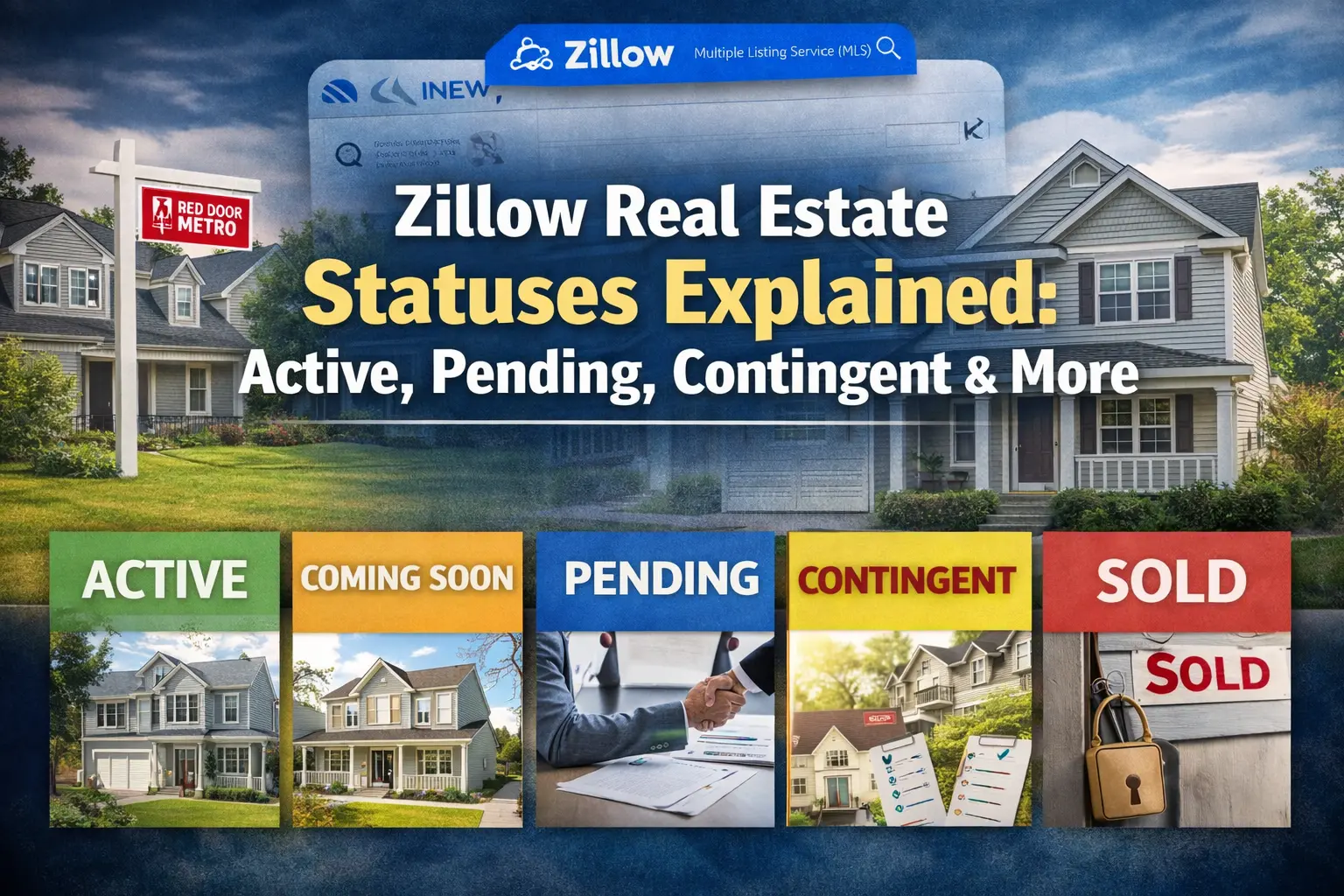

Active
Active means the property is currently listed for sale and available to accept offers.
An active listing:
-
Has not yet gone under contract
-
Is being actively marketed by the seller and listing agent
-
Can be toured, shown, and negotiated
For buyers, “Active” represents the widest range of opportunity. For sellers, it indicates full market exposure. In competitive markets like Tysons Corner, active listings may receive multiple offers quickly.
Coming Soon
Coming Soon indicates that a property will be listed for sale shortly but is not yet available for showings or offers.
Key characteristics:
-
The seller has signed a listing agreement
-
Marketing may be underway
-
Showings are restricted or not allowed yet
-
The listing will transition to Active on a specific future date
Coming Soon listings help generate early interest and allow sellers time to prepare the home while complying with fair housing and MLS rules.
Pending
Pending means the seller has accepted an offer and all contingencies have been satisfied or waived.
At this stage:
-
The transaction is nearing completion
-
Inspections, financing, and appraisals are complete
-
The property is no longer accepting new offers
Pending listings typically proceed to closing unless an unexpected issue arises.
Contingent
Contingent means the seller has accepted an offer, but one or more conditions must still be met before the sale can close.
Common contingencies include:
-
Home inspection
-
Financing approval
-
Appraisal results
-
Sale of the buyer’s current home
While contingent listings are under contract, they still carry some risk of falling through, depending on the contingency terms.
Under Contract
Under Contract indicates that a legally binding purchase agreement has been signed between buyer and seller.
This status generally means:
-
An offer has been accepted
-
The deal is in progress
-
Certain contractual steps may still be underway
In many cases, “Under Contract” and “Contingent” are used interchangeably, though the specific terminology depends on MLS rules and brokerage practices.
Backups Requested
Backups Requested means the seller has accepted an offer but is open to receiving backup offers.
Why this happens:
-
The seller wants leverage in case the primary contract fails
-
There may be concerns with financing or contingencies
-
The market is highly competitive
Backup offers can move into first position if the initial contract is terminated, without restarting the full listing process.
Active Under Contract
Active Under Contract indicates the property is under contract but remains visible to buyers.
This status typically means:
-
The seller has accepted an offer
-
Contingencies are still in place
-
The seller may consider backup offers
This status is common in fast-moving markets and helps maintain buyer interest.
Temporarily Off Market
Temporarily Off Market means the listing has been paused but not withdrawn.
Reasons include:
-
Repairs or renovations
-
Seller travel or personal reasons
-
Market strategy adjustments
The property is not available for showings, but the seller intends to relist without starting a new listing agreement.
Off Market
Off Market indicates the property is not currently listed for sale.
This may occur when:
-
The seller removes the property
-
The listing agreement expires
-
The home is withdrawn indefinitely
Off-market properties are not actively marketed and typically cannot be shown unless relisted.
Sold
Sold means the transaction has successfully closed.
At this point:
-
Ownership has transferred
-
The deed has been recorded
-
The final sale price is public record
Sold data is valuable for market analysis, pricing strategy, and neighborhood valuation.
Price Change
Price Change indicates that the listing price has been adjusted by the seller.
Price changes may reflect:
-
Market feedback
-
Appraisal expectations
-
Time on market
-
Shifts in local demand
Buyers often monitor price changes as signals of seller motivation.
New Construction
New Construction identifies homes that are newly built or under construction.
These listings may:
-
Not yet be complete
-
Offer customization options
-
Include builder warranties
Timelines and pricing structures often differ from resale properties.
Foreclosure
Foreclosure means the property is owned by a lender due to loan default.
Important considerations:
-
Sale processes follow legal requirements
-
Properties may be sold “as-is”
-
Additional timelines and approvals may apply
Foreclosures often require experienced representation due to procedural complexity.
Short Sale
Short Sale occurs when the lender approves a sale for less than the remaining mortgage balance.
Key points:
-
Lender approval is required
-
Processing time is longer than standard sales
-
Pricing may appear attractive but is not guaranteed
Short sales involve strict documentation and regulatory compliance.
Why Understanding Listing Statuses Matters
For buyers:
-
Helps determine offer strategy
-
Sets realistic expectations
-
Avoids missed opportunities
For sellers:
-
Influences marketing decisions
-
Affects negotiation leverage
-
Communicates urgency and availability
Accurate interpretation of listing statuses is essential for informed decision-making in the Virginia real estate market.
Final Thoughts
Real estate statuses are more than labels — they are legal and procedural indicators that shape every transaction. Whether you are buying, selling, or investing in Tysons Corner or the surrounding Northern Virginia area, understanding these terms helps you move confidently and strategically.
At Red Door Metro, clients benefit from clear communication, local expertise, and guidance grounded in licensed real estate practices and regulatory standards. Knowing what each listing status truly means is the first step toward a successful real estate experience.
Frequently Asked Questions (FAQs)
1. What does “Active” mean on a Zillow listing?
An “Active” listing means the home is currently for sale and available to accept offers. Buyers can schedule showings, submit offers, and negotiate terms directly with the seller through their agent.
2. Can I make an offer on a “Coming Soon” property?
In most cases, showings and offers are restricted until the listing becomes Active. “Coming Soon” is primarily a marketing status that signals a future availability date rather than immediate access.
3. What is the difference between “Pending” and “Contingent”?
Both statuses indicate the seller has accepted an offer.
-
Contingent means certain conditions, such as inspections or financing, must still be met.
-
Pending usually means those conditions have already been satisfied and the sale is close to completion.
4. What does “Under Contract” mean for buyers?
“Under Contract” means the buyer and seller have signed a legally binding agreement. While the home is not fully sold yet, it is generally unavailable unless the seller accepts backup offers.
5. What does “Backups Requested” mean on a listing?
This status means the seller has accepted an offer but is willing to consider backup offers in case the primary contract falls through. Backup offers may move forward without the home being relisted.
6. Is “Off Market” the same as “Sold”?
No.
-
Sold means the transaction has closed and ownership has transferred.
-
Off Market means the home is not currently listed for sale and may or may not be sold.
7. Why do listings show “Price Change”?
A price change indicates the seller has adjusted the asking price. This may reflect market conditions, buyer feedback, or a strategy to attract renewed interest.
8. Are “Foreclosure” and “Short Sale” the same thing?
No.
-
A foreclosure is owned by a lender after loan default.
-
A short sale is still owned by the homeowner but requires lender approval to sell for less than the mortgage balance.
9. Can a “Pending” or “Contingent” deal fall through?
Yes. While less common at the pending stage, deals can fall through due to financing issues, appraisal problems, or unmet contractual conditions.
10. Why is understanding listing statuses important when buying or selling a home?
Listing statuses communicate where a property stands legally and procedurally. Understanding them helps buyers act quickly and helps sellers set accurate expectations during negotiations.